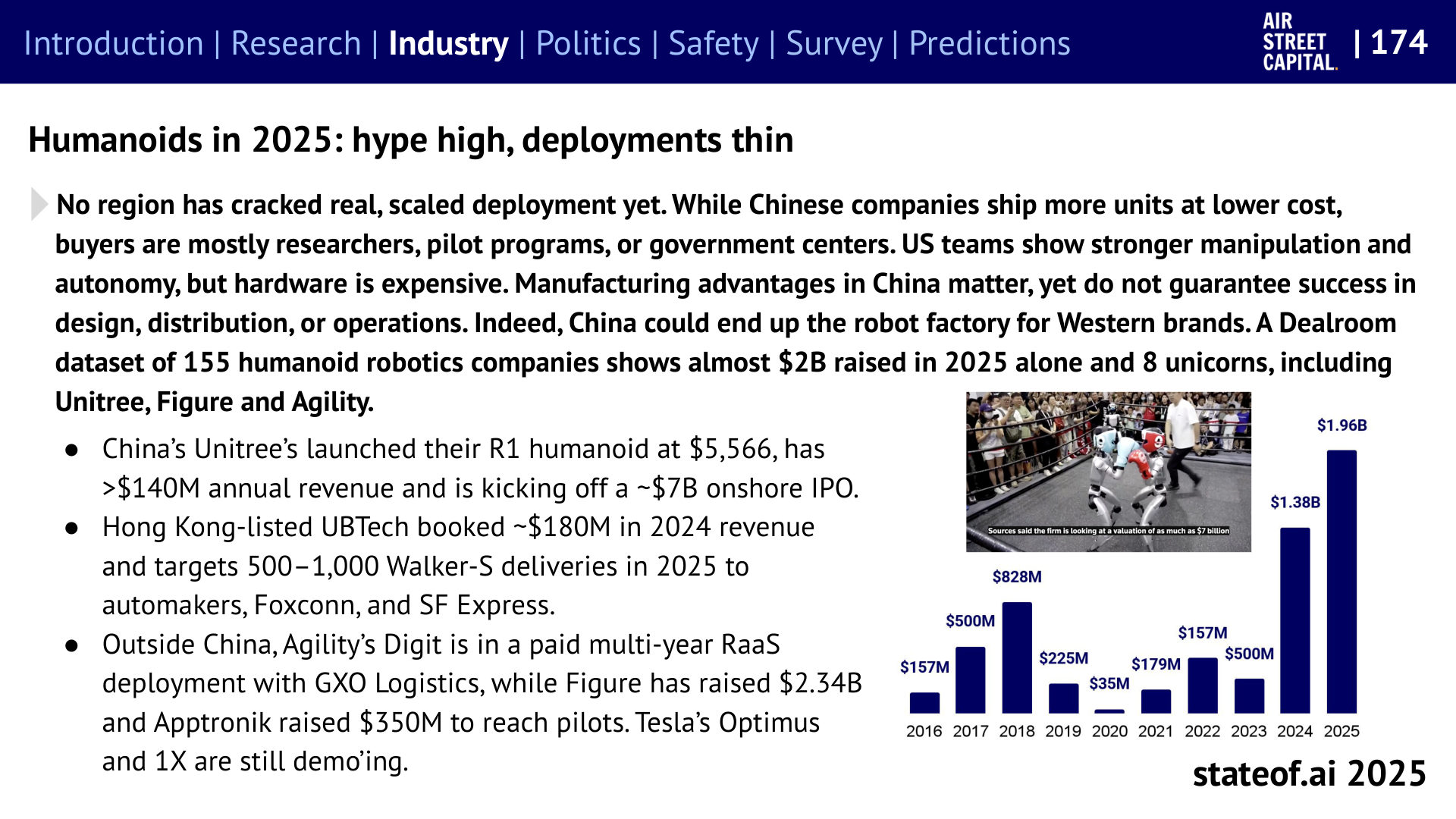
An inspectable step between the command and the motors
Molmo-Act translated a high-level command into intermediate visual or geometric representations, such as a trajectory sketch, before producing motor commands. Gemini Robotics 1.5 paired a high-level planner with a system that executed its plan. These intermediate steps gave researchers something to inspect when a robot failed and a way to organize longer tasks.
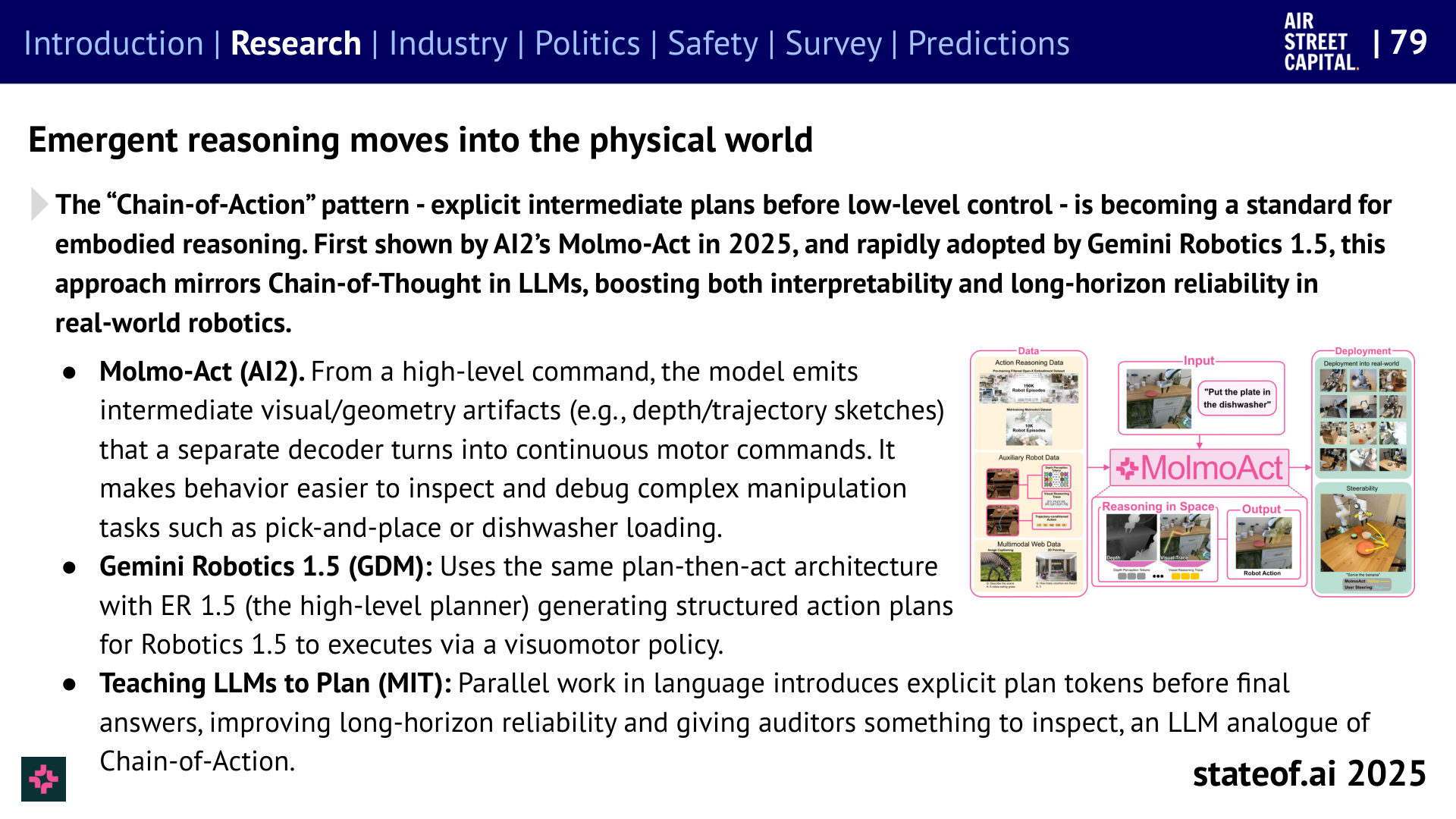
More data, with a difficult adaptation tradeoff
Researchers increasingly learned from unstructured video and combined vision, language, and action. But adapting a large pretrained model to much smaller robot datasets risked losing general knowledge. The report contrasted approaches that preserved the base model with approaches that trained the system end to end. Data scale and task requirements influenced which approach made sense.
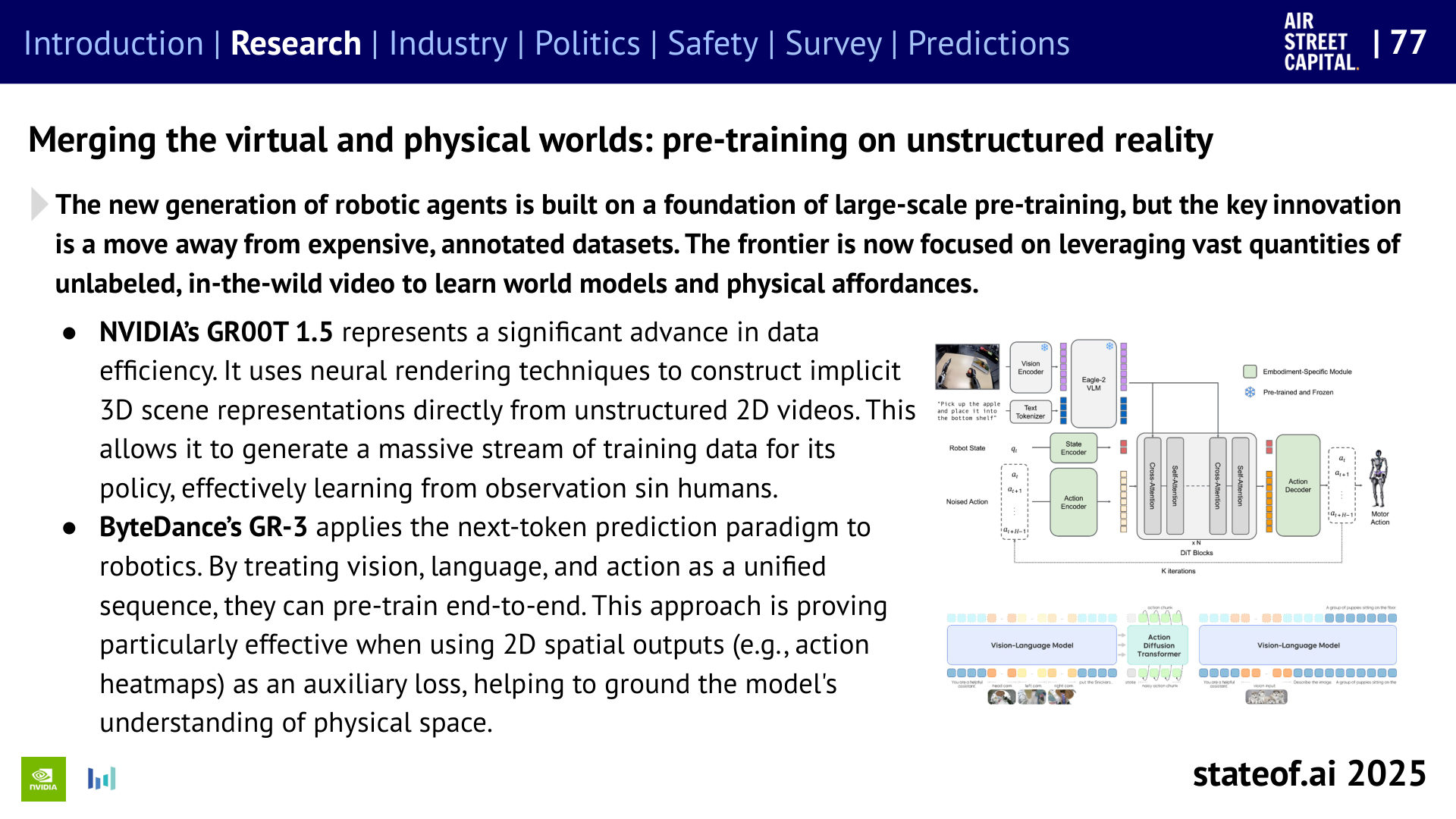
Deployment evidence varies by market
Driverless transport had accumulated meaningful operating mileage: the report recorded 71 million Waymo rider-only miles through March 2025. Humanoids were at a different stage. The report described a landscape dominated by research purchases, pilot programs, and demonstrations, alongside early paid deployments such as Agility’s work with GXO. Those markets should not be combined into one claim that general-purpose robotics was solved.