By 2018, governments were presenting AI as a source of economic and strategic advantage. National plans combined funding, skills, and industrial ambitions. The report also asked a more difficult question: how much of the changing labor market could actually be attributed to automation?
National plans combine skills and industrial ambitions
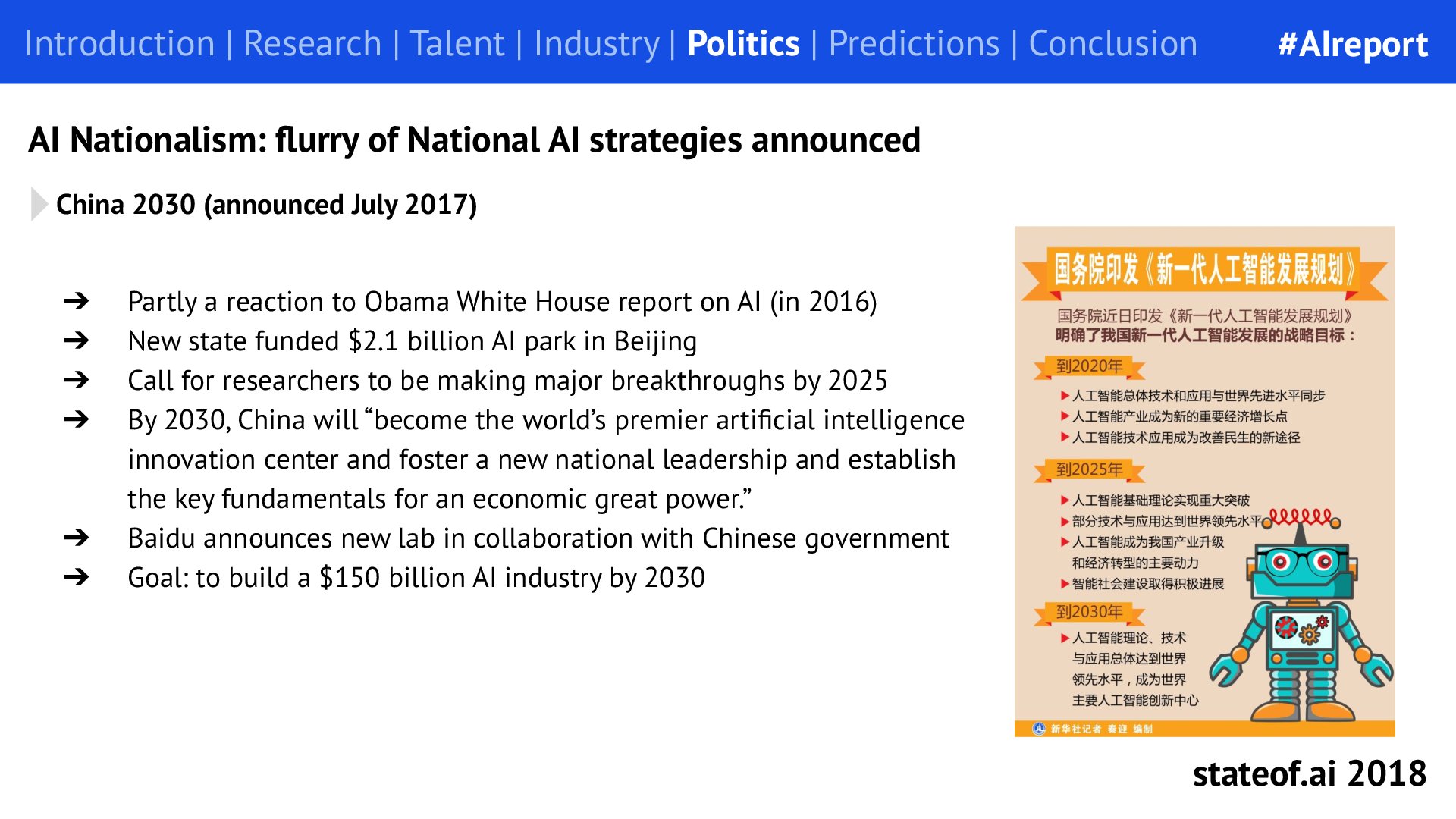
The report compared China’s 2030 AI strategy with plans in Europe and elsewhere. China’s stated ambition included a $150 billion AI industry by 2030. Such targets signaled intent; they were not measurements of an industry that already existed at that size.
The UK pairs public funding with training commitments
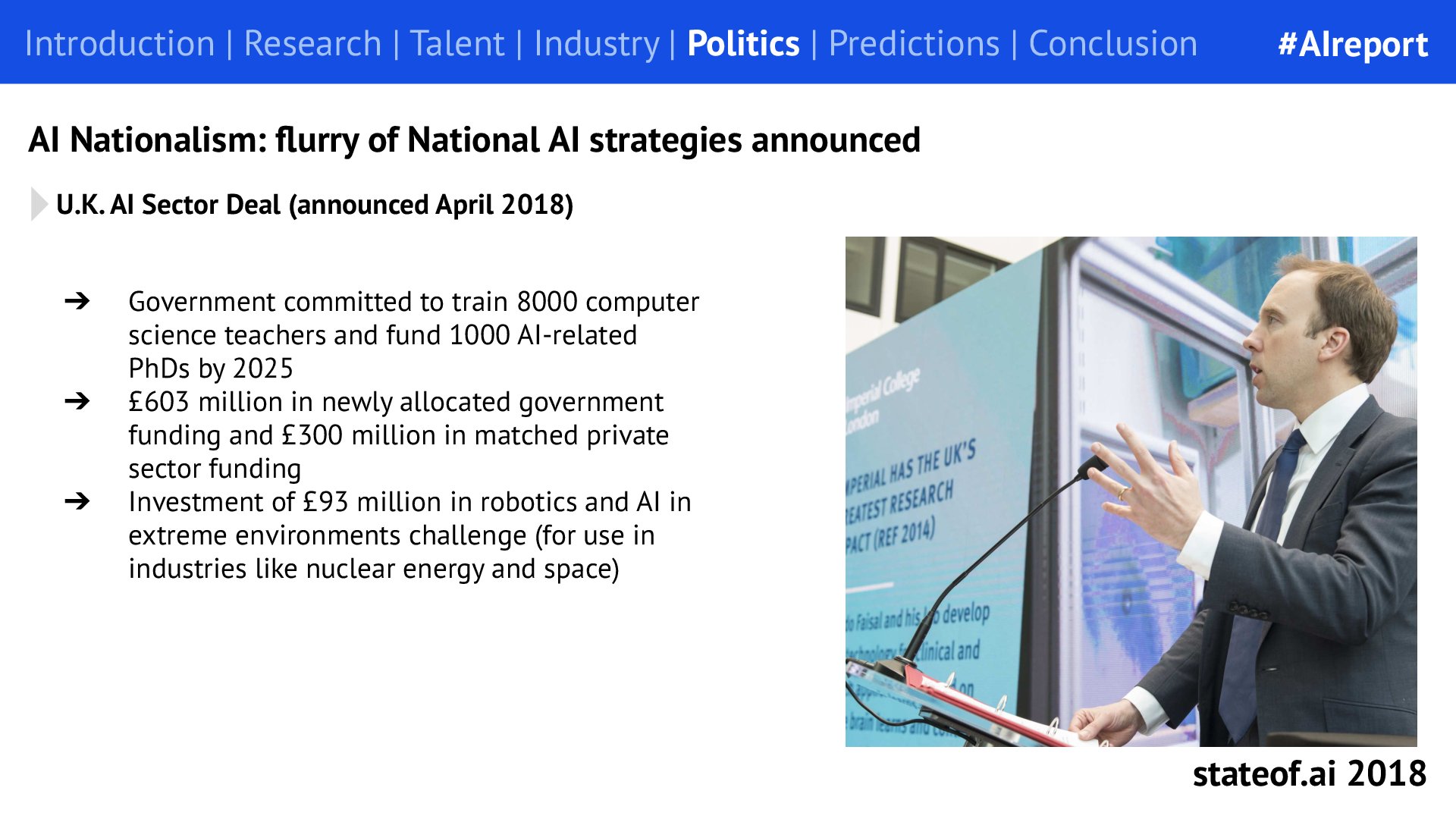
The UK AI Sector Deal included £603 million in newly allocated government funding, £300 million in matched private funding, and commitments for teachers and PhDs. The report treated these as policy commitments with different purposes, not directly comparable measures of national capability.
Automation is not the only explanation for labor-market change
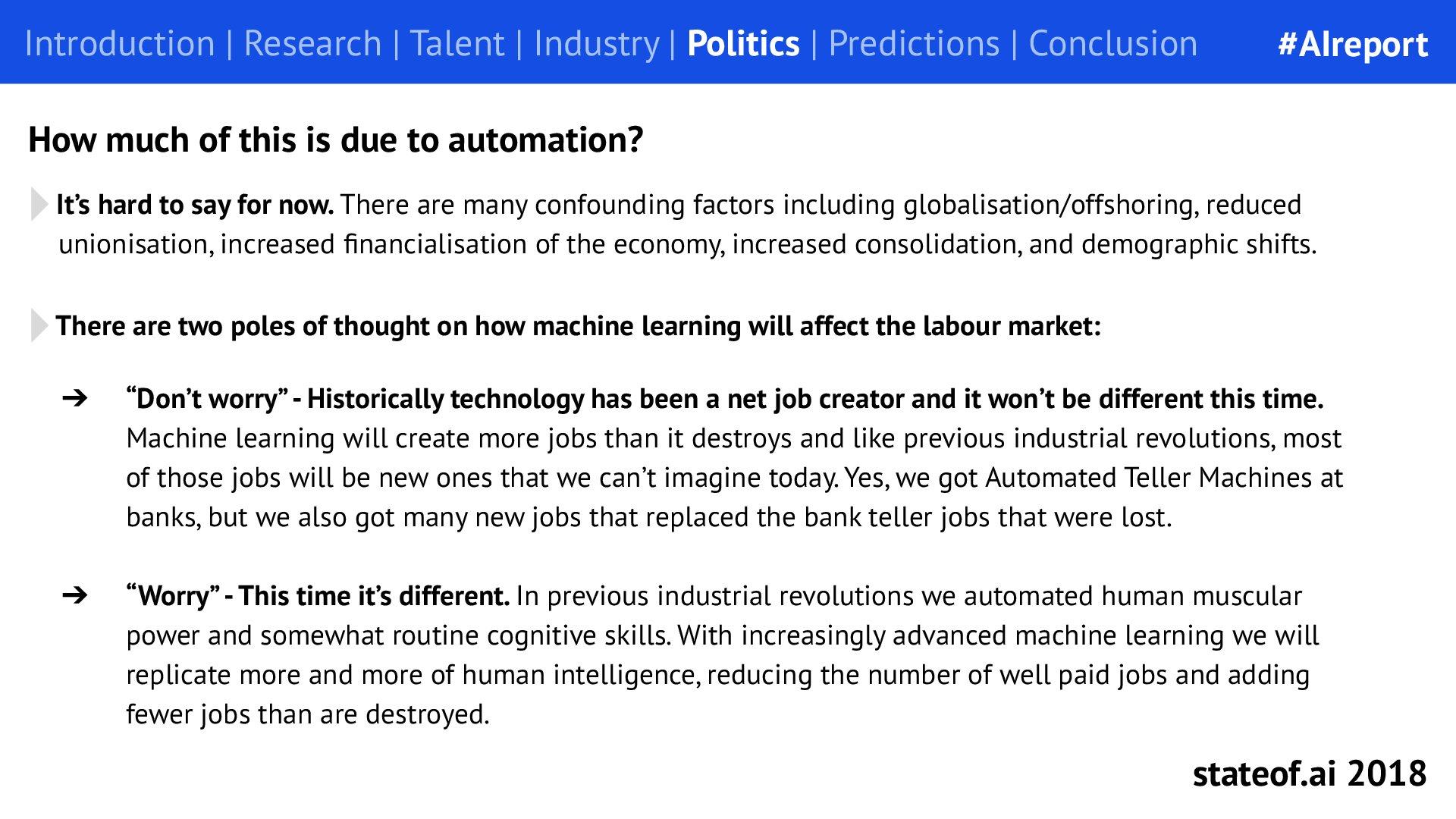
The report discussed globalization, offshoring, declining unionization, and other factors alongside automation. It resisted assigning all changes in wages or employment to AI, an important limit when interpreting surveys about the future of work.
The report explicitly placed automation alongside globalization, financialization, consolidation, and demographic change when discussing work. That framing matters when reading historical forecasts: an observed labor-market change cannot be assigned to AI simply because AI capabilities improved over the same period.
Evidence you can use
Politics in the 2018 report
Historical snapshot: June 2018. Dates and populations are specified per row.
Policy amounts retain their original currencies and announcement-time meaning. Targets and funding commitments are not realized outcomes. Labor-market trends do not by themselves identify the effect of AI.
It described governments treating AI capability as a strategic priority, with national plans for funding, skills, and industrial development. China’s 2030 plan was a prominent example.
The strategy called for major research breakthroughs by 2025 and world leadership by 2030. These were stated ambitions whose achievement would require later evidence.
The AI Sector Deal included £603 million of newly allocated government funding and £300 million of matched private-sector funding. They were separate commitments, expressed in their original currency.
The report described plans to train 8,000 computer-science teachers and fund 1,000 AI-related PhDs by 2025. These were commitments in the announced deal, not completed outcomes.
The report named globalization and offshoring, reduced unionization, financialization, consolidation, and demographic shifts. These confounders complicated attempts to attribute workforce changes specifically to AI.
No. It contrasted a view that technology historically creates work with a concern that this wave could automate a broader range of human tasks. It did not resolve that debate with a single forecast.
Historical snapshot published June 29, 2018. This web edition was prepared on 2026-10-11 from the online deck and original launch posts. Findings and forecasts retain their original time frame.
2018 report, PDF page 130Original 2018 report. This edition has no printed slide numbers. References use one-based PDF pages.
2018 report, PDF page 139Original 2018 report. This edition has no printed slide numbers. References use one-based PDF pages.
2018 report, PDF page 143Original 2018 report. This edition has no printed slide numbers. References use one-based PDF pages.
Benaich, Nathan, and Ian Hogarth. “AI becomes a subject of national strategy.” State of AI Report 2018. Historical report snapshot; web edition prepared 2026-10-11.