AlphaFold 3 models more of the molecular system
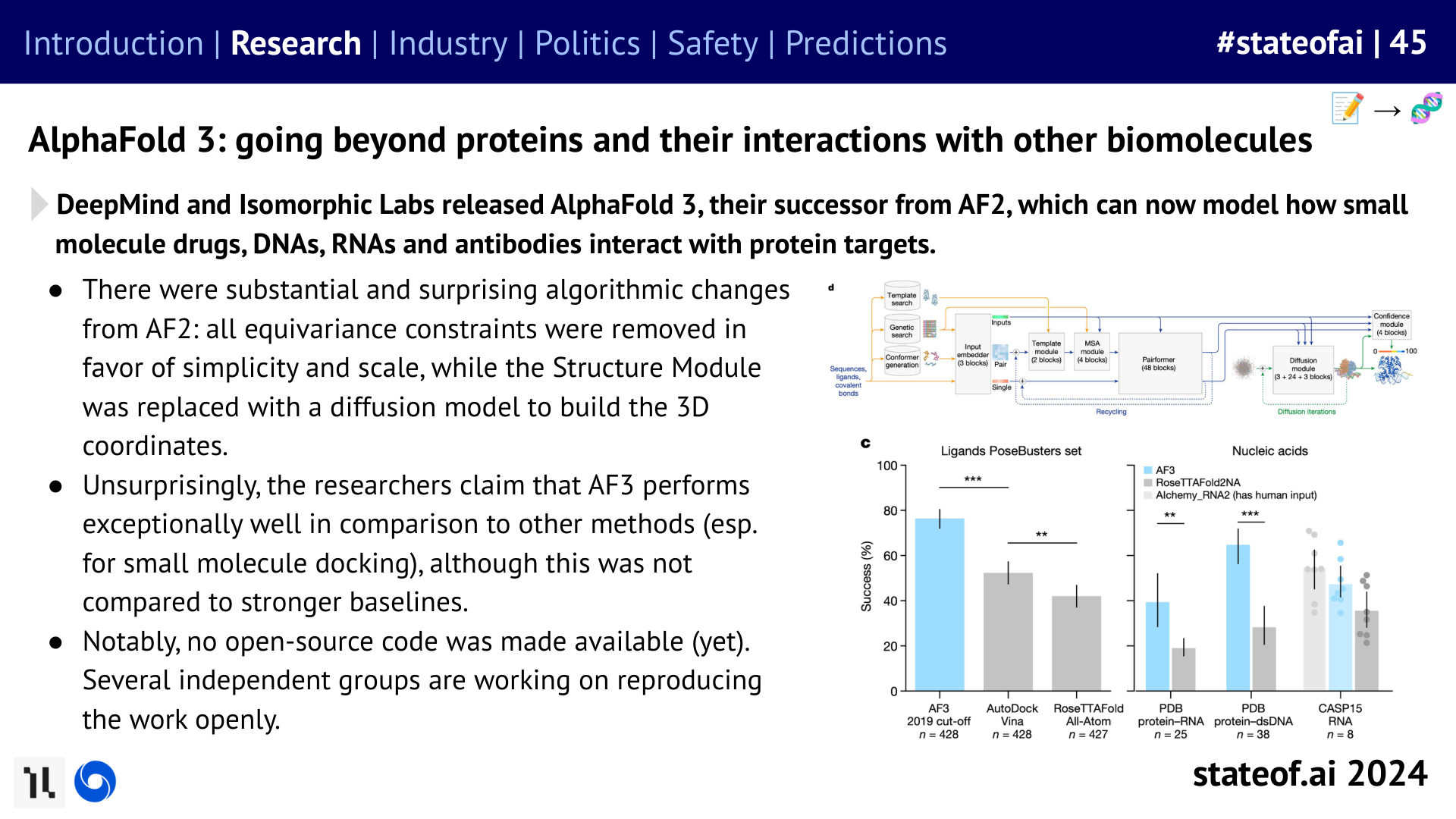
AlphaFold 3 extended structure modeling to interactions involving proteins, small molecules, DNA, RNA, and antibodies. Its design used diffusion to generate three-dimensional coordinates. The report also raised limits: comparisons did not include some stronger baselines, and code was not available at the time of publication.
Language models generate functional genome editors
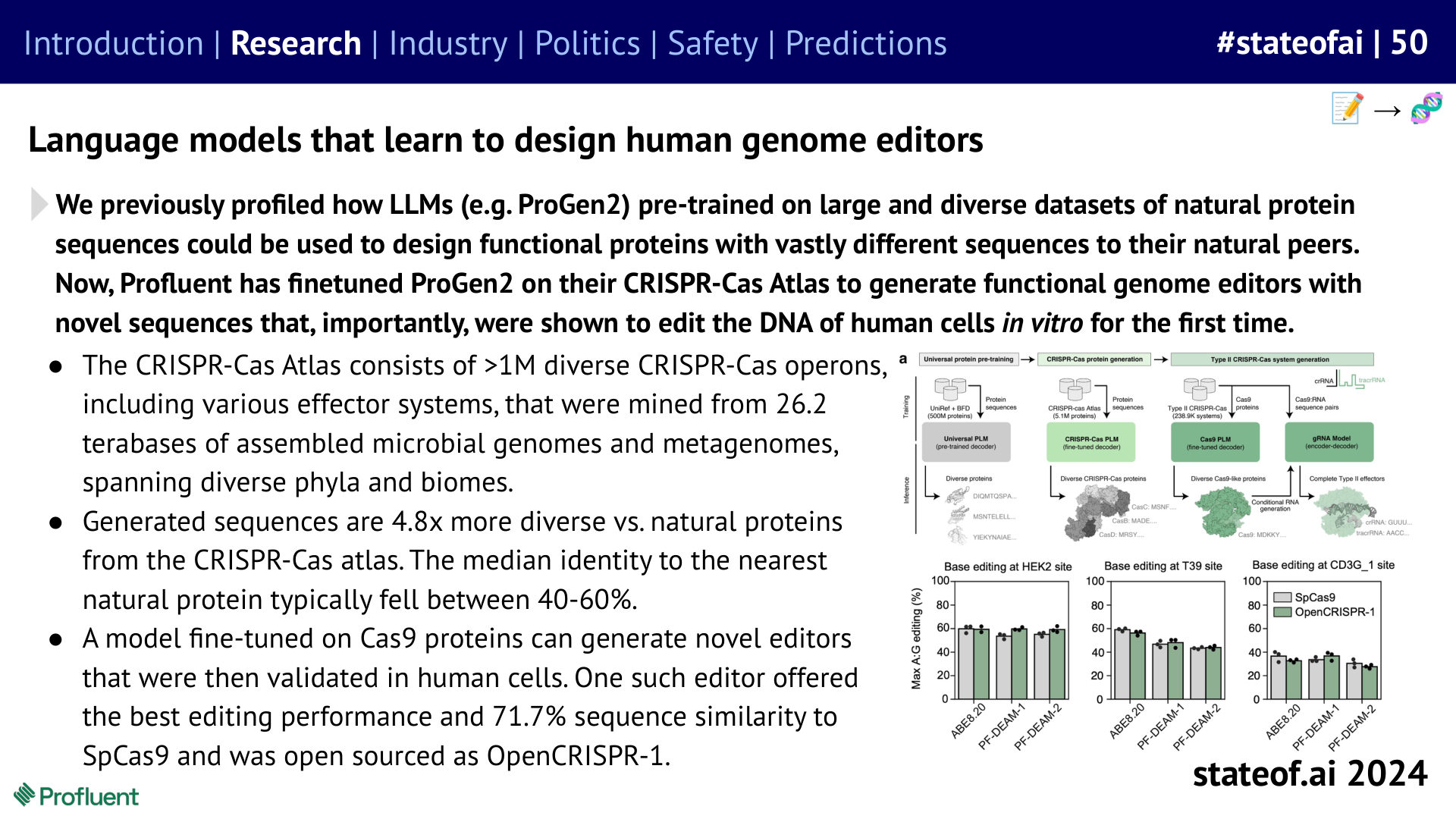
Profluent fine-tuned a protein language model on its CRISPR-Cas Atlas and generated novel editors that altered DNA in human cells in vitro. The work went beyond plausible sequences to experimental function. One editor, OpenCRISPR-1, was made openly available; the result was a research validation, not a clinical treatment.
The data and the experiment both matter
The CRISPR-Cas Atlas contained more than one million operons mined from large collections of microbial genomes and metagenomes. Generated sequences were substantially different from known natural examples. Those differences became scientifically meaningful because selected editors were then tested in cells, rather than judged only by model scores.