A small research community attracts intense competition
By Nathan Benaich and Ian Hogarth · 2018 report
The 2018 report portrayed AI expertise as scarce and unevenly distributed. Large technology companies competed for researchers, and their presence in leading conferences illustrated their influence. The available diversity statistics covered only a limited view of the community.
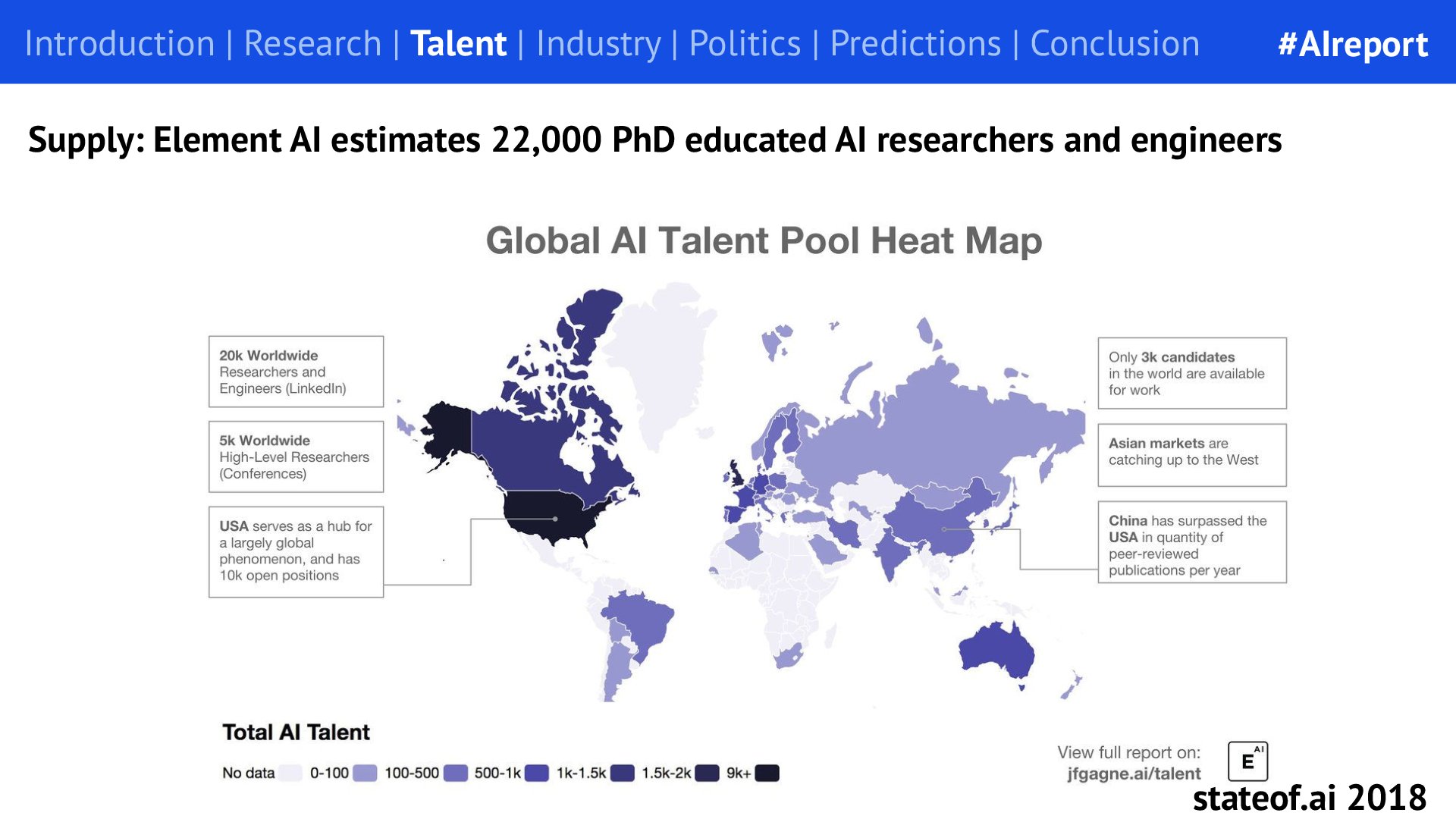
The report cited Element AI’s estimate of 22,000 PhD-educated AI researchers and engineers. This was an estimate of a defined specialist group, not everyone who used machine learning. Its importance was the contrast between limited specialist supply and growing demand.
Conference participation reveals concentration and gaps
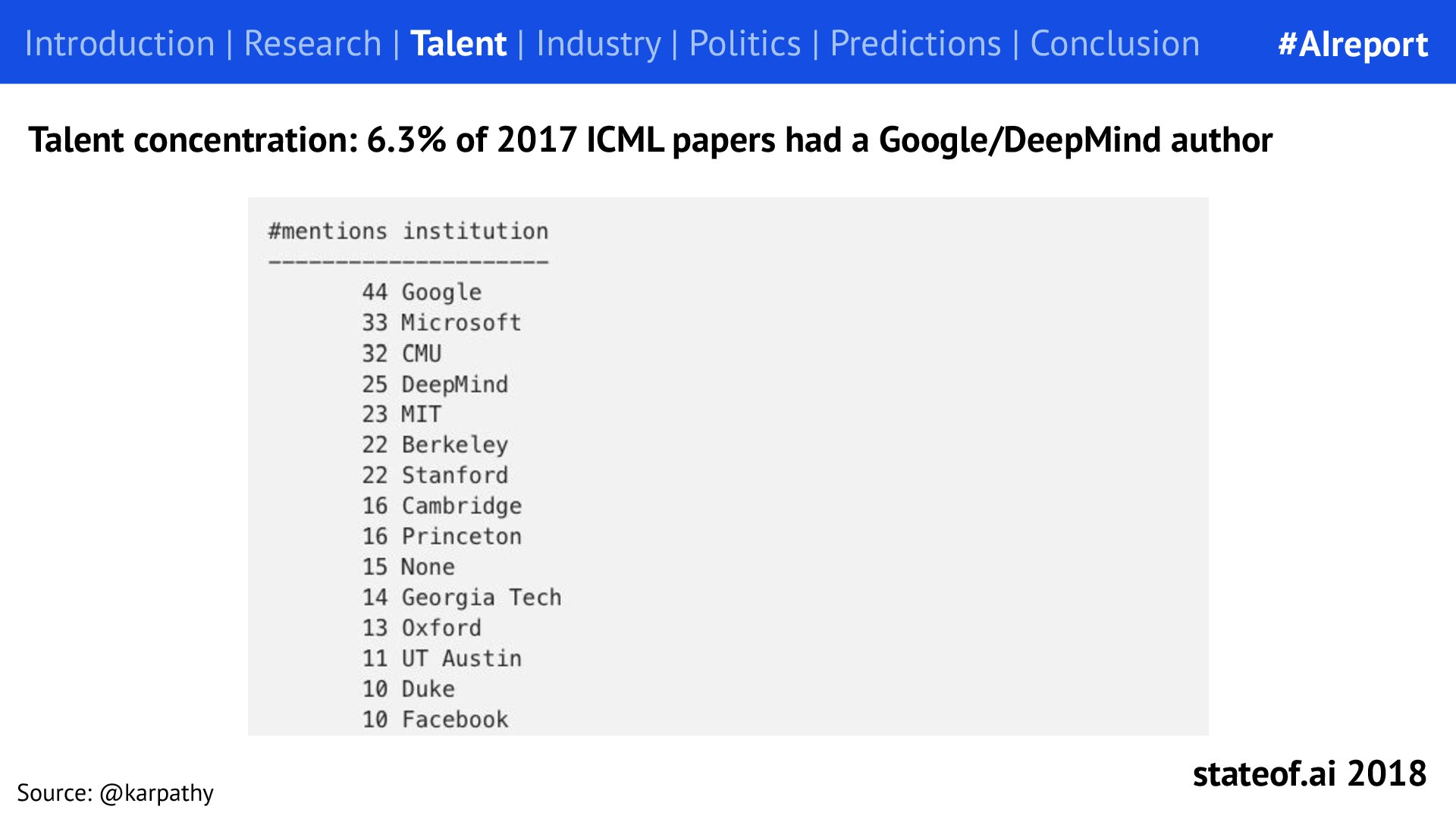
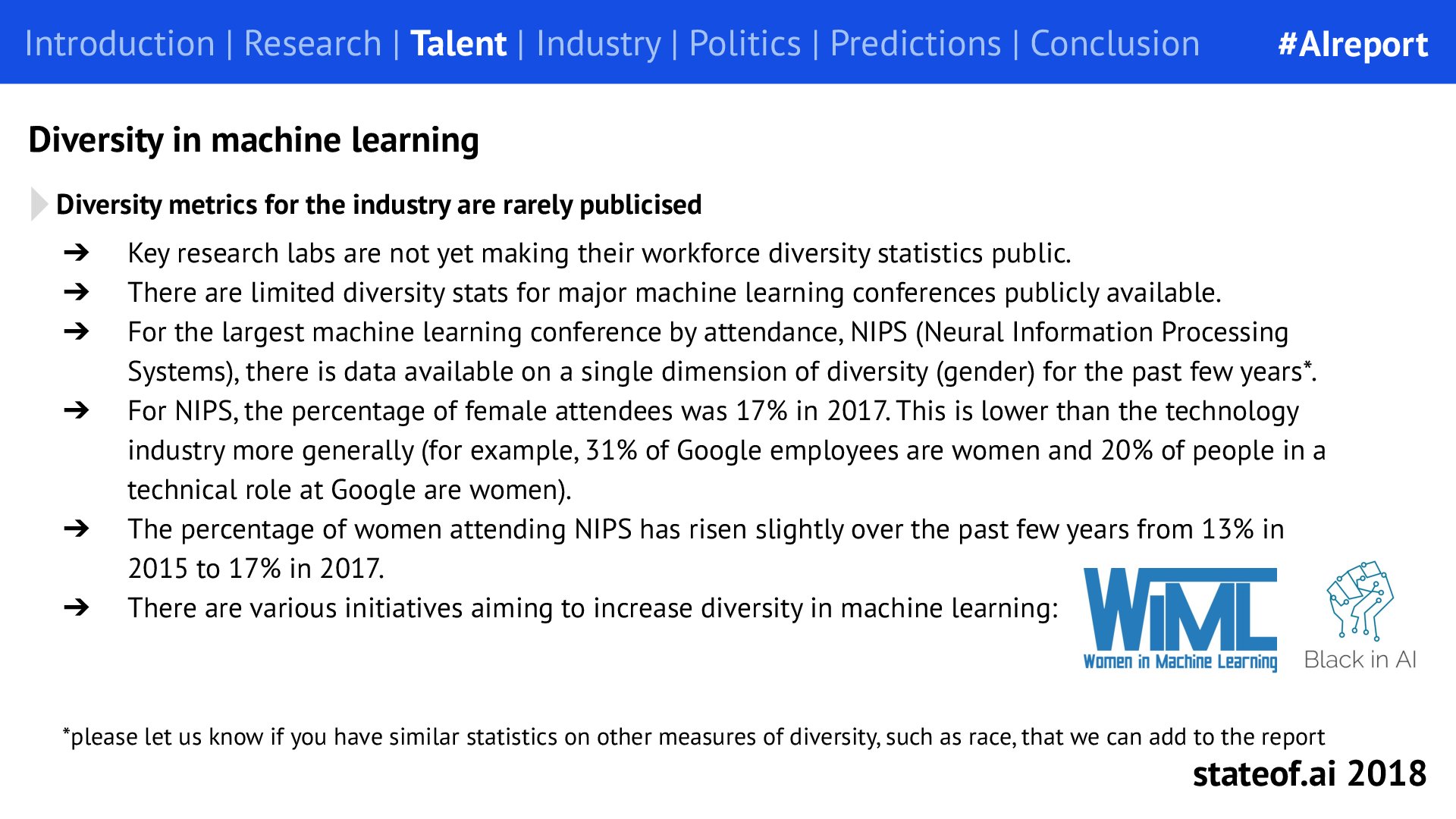
Google and DeepMind appeared on 6.3% of ICML 2017 papers in the cited analysis. Separately, women accounted for 17% of NIPS 2017 registrations. These measures described different populations, but both helped make the composition of the field visible.
The report noted that major labs rarely published workforce diversity figures and that conference data often covered gender alone. A few available percentages could not describe the full range of exclusion or representation across the industry.
The 6.3% figure used accepted ICML papers as its denominator and asked whether a Google or DeepMind author appeared on them. It captured one form of institutional influence. It did not count the entire AI workforce or establish how many researchers worked exclusively for those organizations.
Evidence you can use
Talent in the 2018 report
Historical snapshot: June 2018. Dates and populations are specified per row.
Talent estimates, paper authorship, and conference attendance have different denominators. They should not be combined into a single workforce estimate. Diversity data were incomplete.
It cited an Element AI estimate of 22,000 PhD-educated AI researchers and engineers. That figure covered a defined specialist population, not every developer or practitioner using AI.
The estimate concerned PhD-educated AI researchers and engineers in Element AI’s analysis. It was narrower than everyone writing software, using machine learning, or working in an AI-related role.
The 22,000-person estimate described a specialist population, while the ICML affiliation analysis showed where published research was concentrated. The finding that 6.3% of accepted ICML 2017 papers included a Google or DeepMind author addressed institutional participation, rather than total workforce size.
It measured the share of ICML 2017 papers with a Google or DeepMind author in the cited analysis. It was a publication-affiliation statistic, not a workforce market share.
It described women among NIPS 2017 registrations. It should not be generalized to all AI researchers, all conference authors, or the broader technology workforce.
For NIPS registrations, the reported share rose from 13% in 2015 to 17% in 2017. That movement concerned a specific conference measure and still left substantial imbalance.
The report noted that companies rarely published diversity metrics specifically for their AI workforces. Broad company statistics and conference participation were useful context but measured different populations.
Historical snapshot published June 29, 2018. This web edition was prepared on 2026-10-11 from the online deck and original launch posts. Findings and forecasts retain their original time frame.
2018 report, PDF page 57Original 2018 report. This edition has no printed slide numbers. References use one-based PDF pages.
2018 report, PDF page 61Original 2018 report. This edition has no printed slide numbers. References use one-based PDF pages.
2018 report, PDF page 68Original 2018 report. This edition has no printed slide numbers. References use one-based PDF pages.
Benaich, Nathan, and Ian Hogarth. “A small research community attracts intense competition.” State of AI Report 2018. Historical report snapshot; web edition prepared 2026-10-11.