Training speed affected which experiments researchers could afford to run. The 2018 report followed the rise of GPUs and specialized accelerators, emphasizing that more expensive hardware could still be cheaper overall if it finished a training job sooner.
Parallel training changes the pace of experimentation
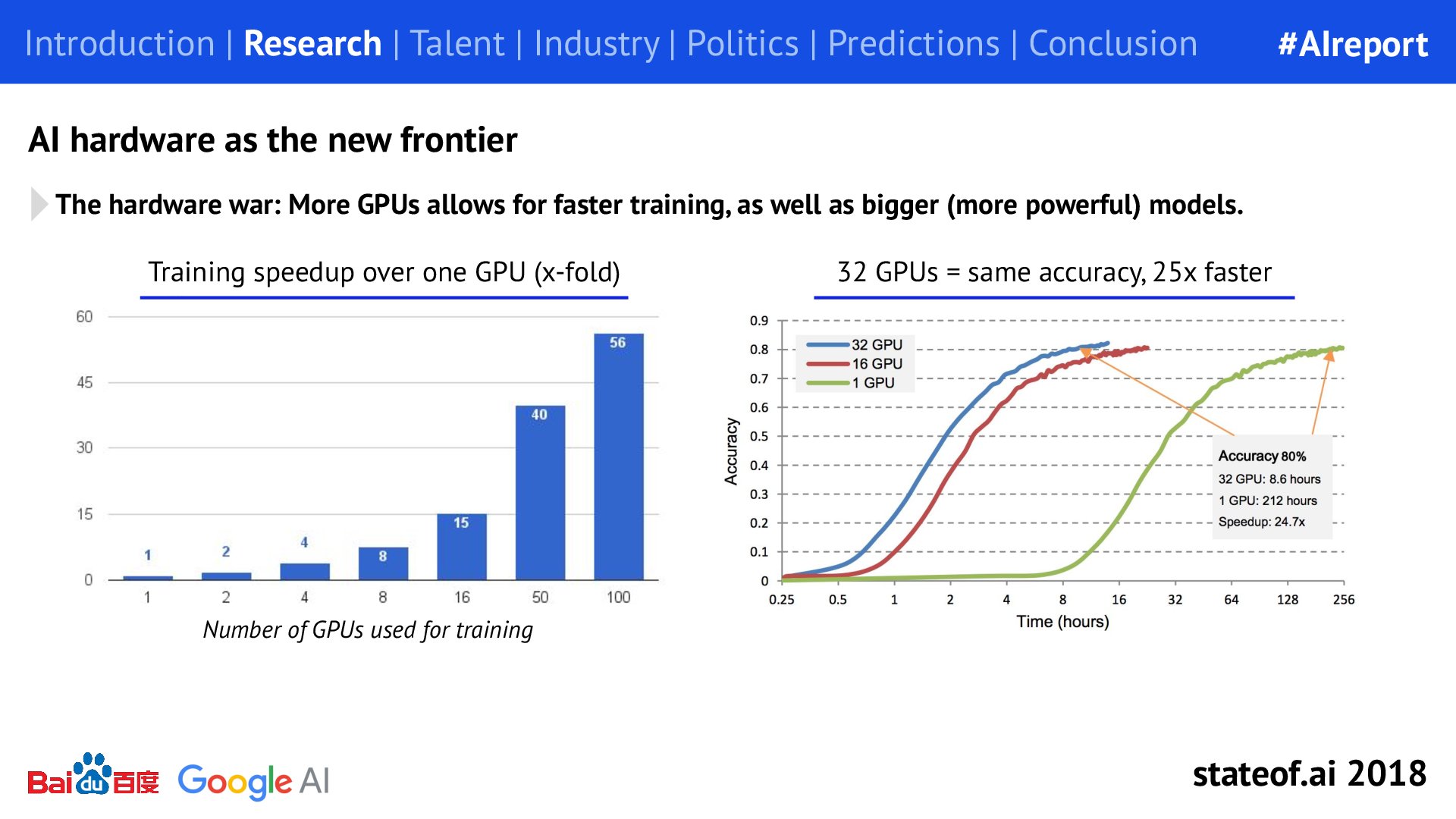
One illustrated training comparison used 32 GPUs to reach the same accuracy 25 times faster than a single GPU. The result showed why researchers invested in parallel systems. It was a particular workload comparison, not a guarantee of proportional speedups for every model.
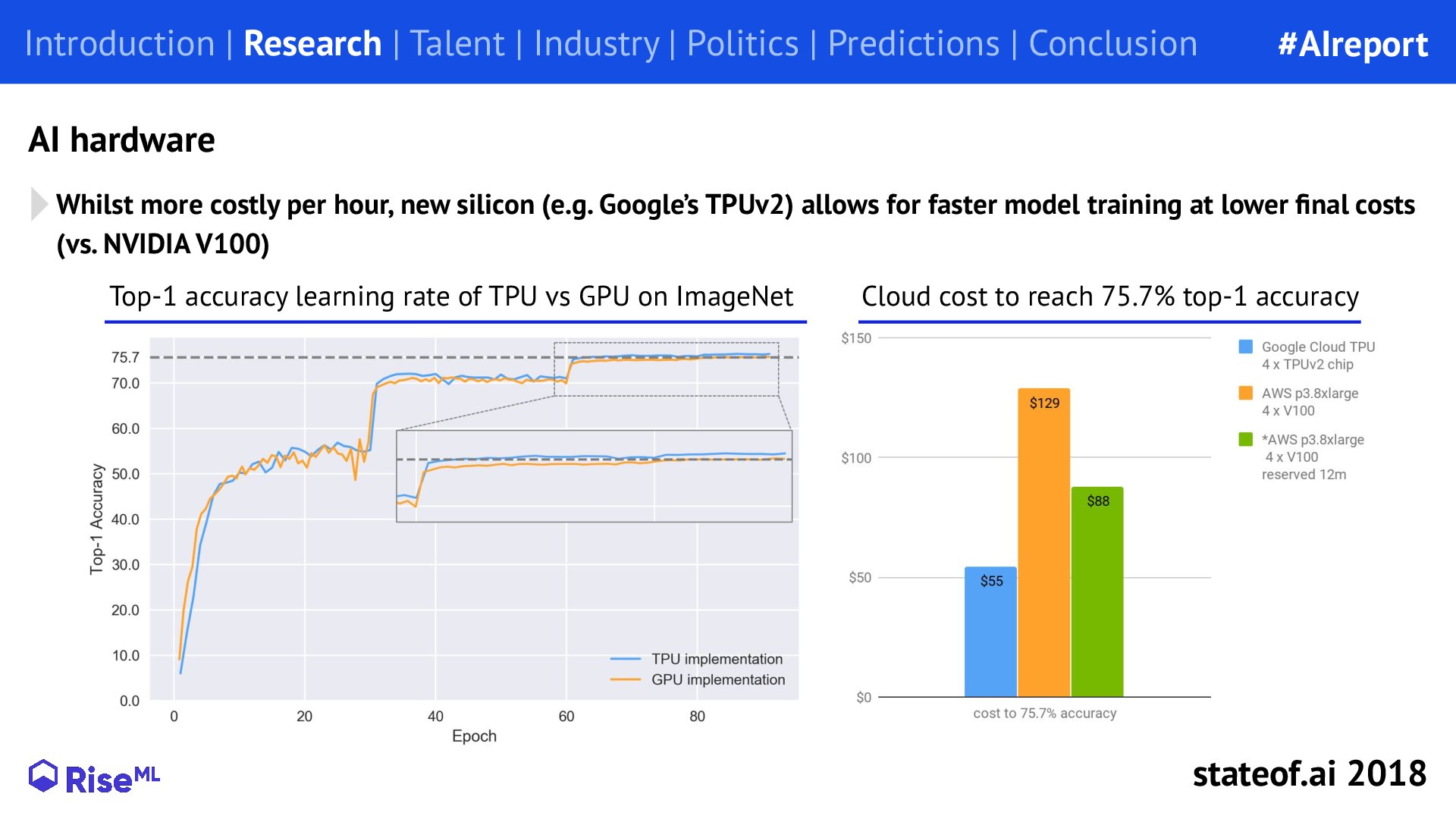
The report compared cloud hardware by the cost of reaching a target ImageNet accuracy. A faster accelerator could cost more per hour but use fewer hours. This made end-to-end training cost a more useful comparison than rental prices alone.
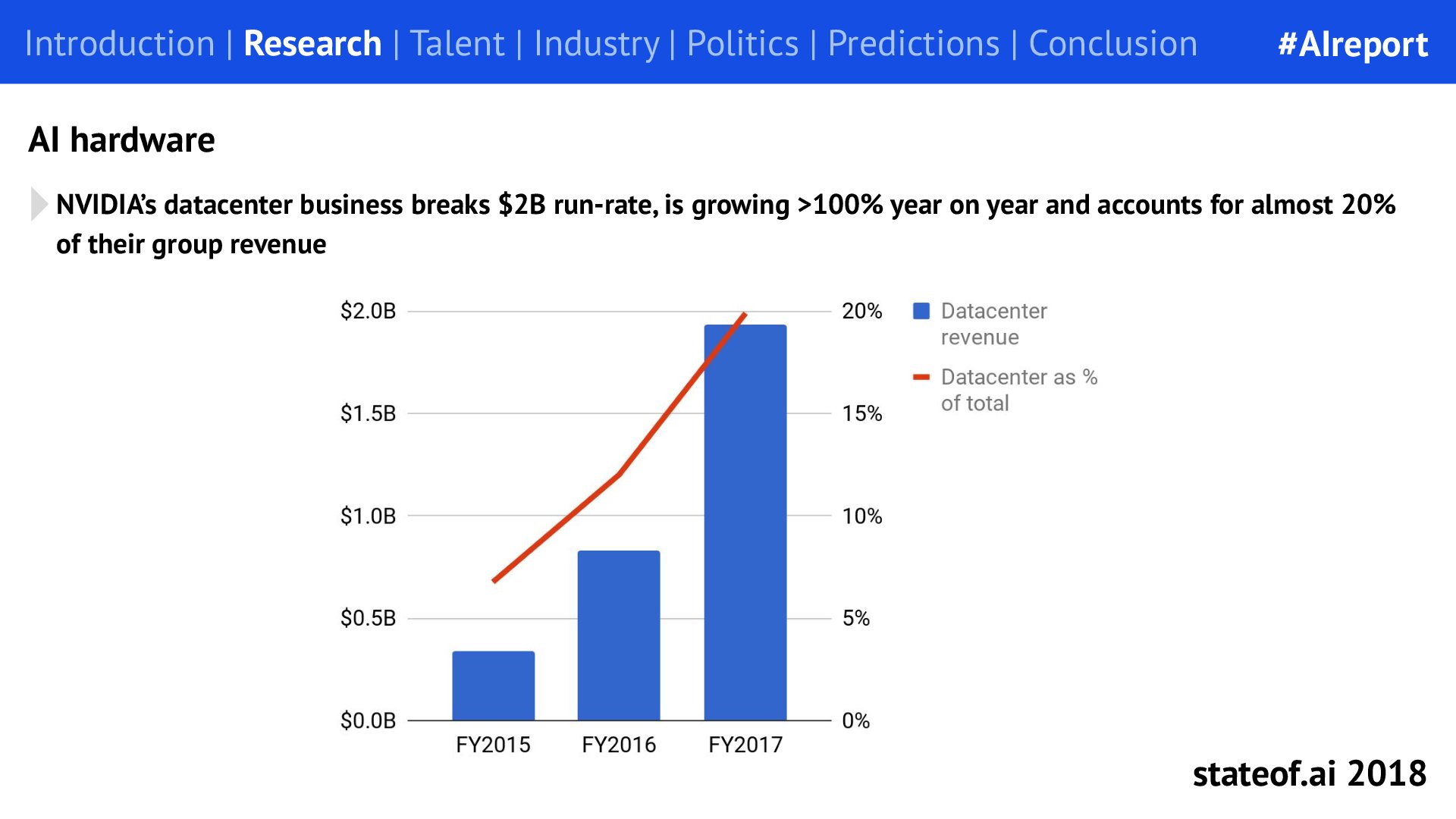
NVIDIA’s data-center business had passed a $2 billion revenue run rate and was growing more than 100% year over year in the report’s snapshot. It accounted for almost 20% of group revenue. These figures showed the commercial importance of data-center workloads alongside the technical comparisons of training speed and cost.
The speedup and cost examples concern specific training configurations. They do not establish a universal ranking of hardware or reflect present-day cloud prices.
GPUs enabled faster training and larger models. In one comparison, 32 GPUs reached the same accuracy 25 times faster than one GPU, changing the pace at which experiments could be run.
The report showed a 25-fold training speedup over one GPU at the same accuracy. It illustrated the benefit of parallel training in that particular comparison.
No. The reported speedup was 25 times. The example therefore showed substantial gains without one-for-one scaling between the number of GPUs and training speed.
The comparison measured the cost of reaching 75.7% top-1 accuracy on ImageNet. That target defined the result against which the hardware options were compared.
Speed determines how soon an experiment finishes; cost determines how much it consumes. The report showed why a system’s hourly price alone did not settle either question.
The report said NVIDIA’s data-center business had passed a $2 billion run rate, was growing more than 100% year over year, and represented almost 20% of group revenue. This was a business-unit snapshot, not a measurement of the entire AI chip market.
Historical snapshot published June 29, 2018. This web edition was prepared on 2026-10-11 from the online deck and original launch posts. Findings and forecasts retain their original time frame.
2018 report, PDF page 11Original 2018 report. This edition has no printed slide numbers. References use one-based PDF pages.
2018 report, PDF page 21Original 2018 report. This edition has no printed slide numbers. References use one-based PDF pages.
2018 report, PDF page 24Original 2018 report. This edition has no printed slide numbers. References use one-based PDF pages.
Benaich, Nathan, and Ian Hogarth. “Hardware becomes a constraint on AI progress.” State of AI Report 2018. Historical report snapshot; web edition prepared 2026-10-11.