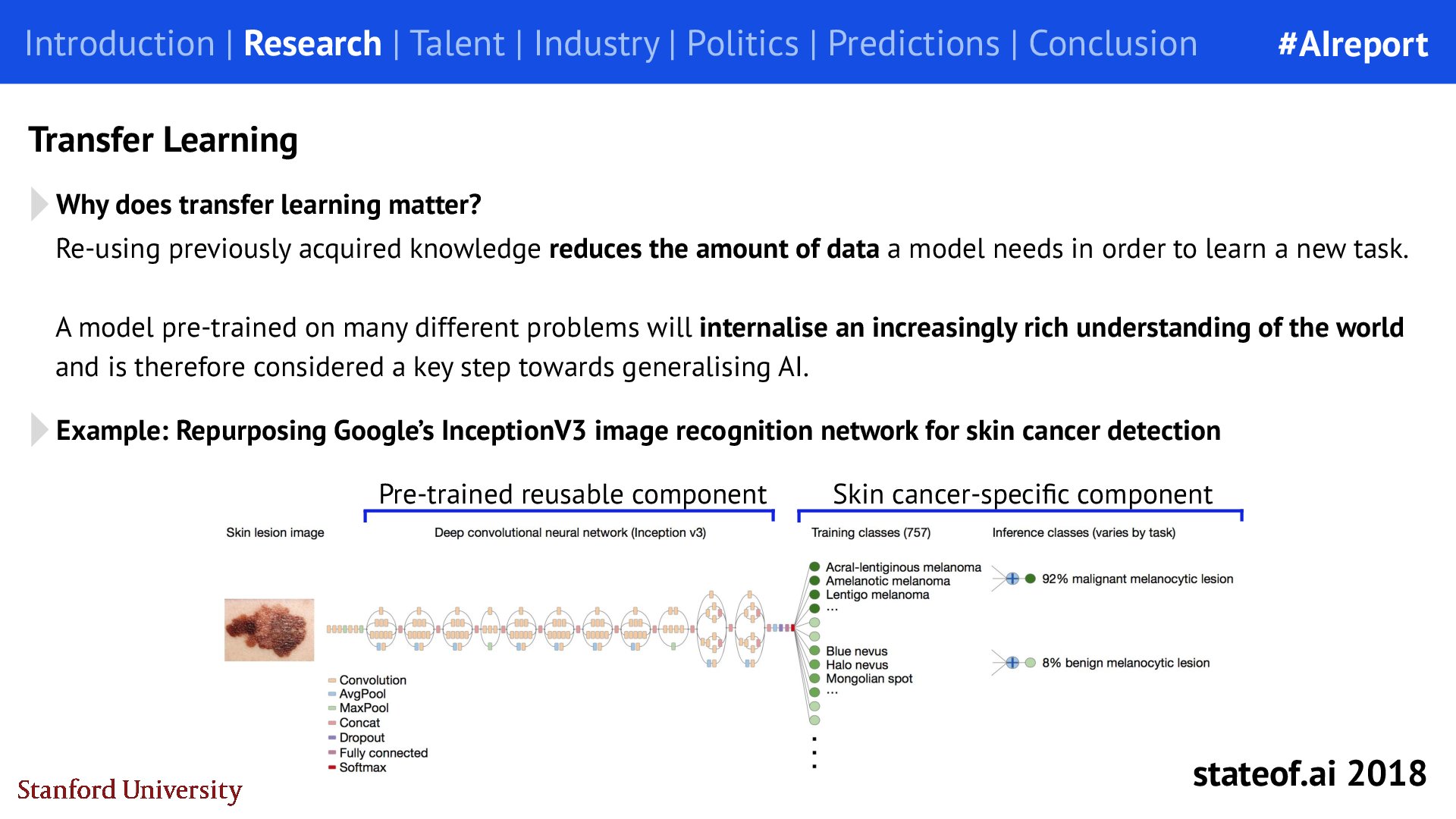
It allowed a model to reuse features learned on one problem when training for another, potentially reducing the amount of new task-specific data needed. The report illustrated this with image-recognition features adapted to skin-lesion classification.
These are research examples from 2018, not clinical recommendations or a measurement of general intelligence. Transfer performance depends on the relationship between the original and new tasks; adversarial examples illustrate vulnerabilities rather than normal-use error frequency.
Illustrated failure mode of image classifiers; not a population-wide error rate.2018 report, PDF page 48
These are research examples from 2018, not clinical recommendations or a measurement of general intelligence. Transfer performance depends on the relationship between the original and new tasks; adversarial examples illustrate vulnerabilities rather than normal-use error frequency.
Historical snapshot published June 29, 2018. This web edition was prepared on 2026-10-11 from the online deck and original launch posts. Findings and forecasts retain their original time frame.
2018 report, PDF page 8Original 2018 report. This edition has no printed slide numbers. References use one-based PDF pages.
2018 report, PDF page 37Original 2018 report. This edition has no printed slide numbers. References use one-based PDF pages.
2018 report, PDF page 48Original 2018 report. This edition has no printed slide numbers. References use one-based PDF pages.
Benaich, Nathan, and Ian Hogarth. “Why did transfer learning matter in 2018?” State of AI Report 2018. Historical report snapshot; web edition prepared 2026-10-11.