Who answered
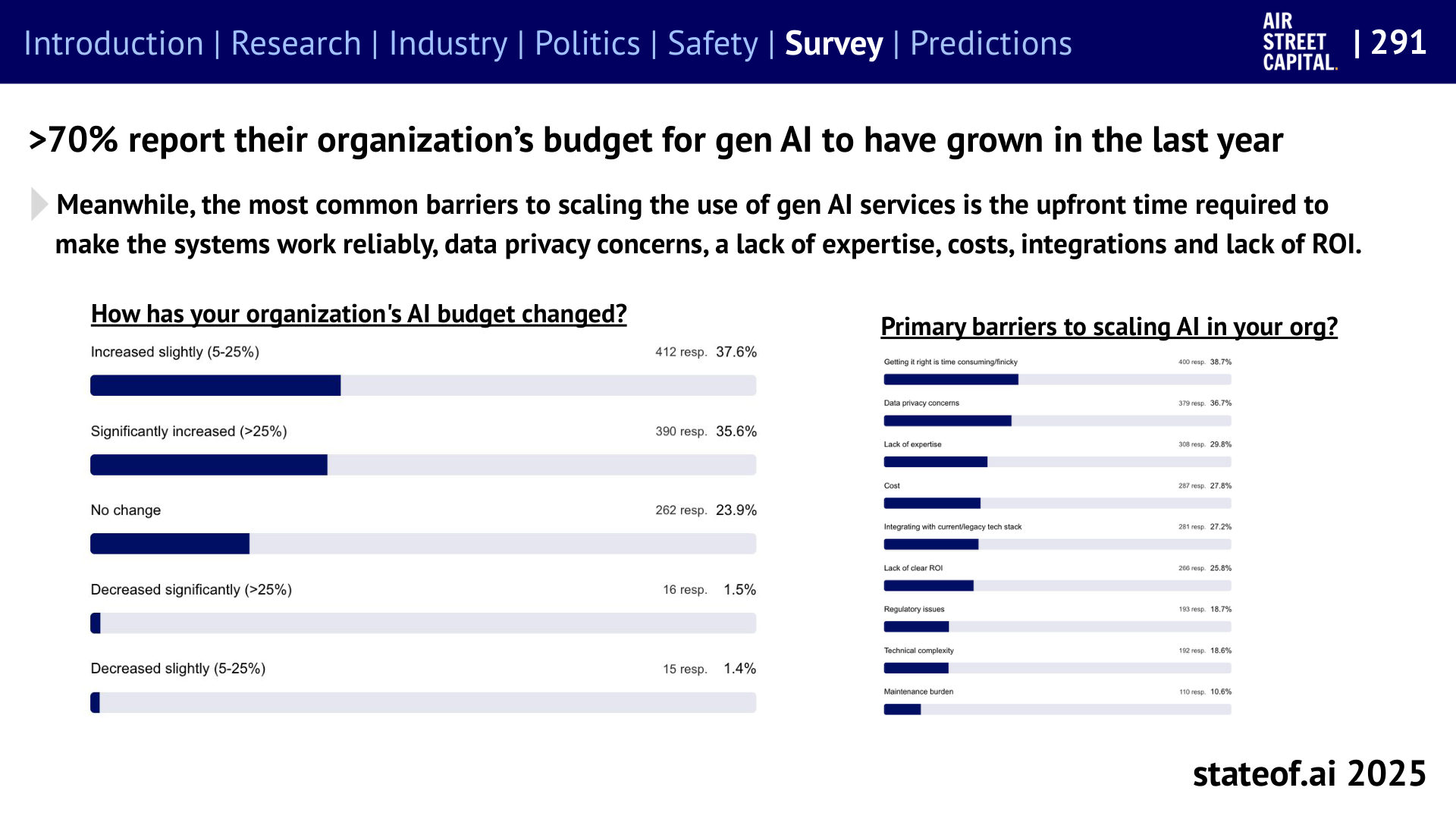
The deck records 1,183 participants surveyed online from July 2 to September 27, 2025. More than 90% were highly educated professionals aged 25-64, working in startups, public companies, or academia. Around 80% were distributed across the US, UK, and Europe. The launch posts rounded the sample to 1,200; the deck supplies the more precise count used here.
People spend their own money
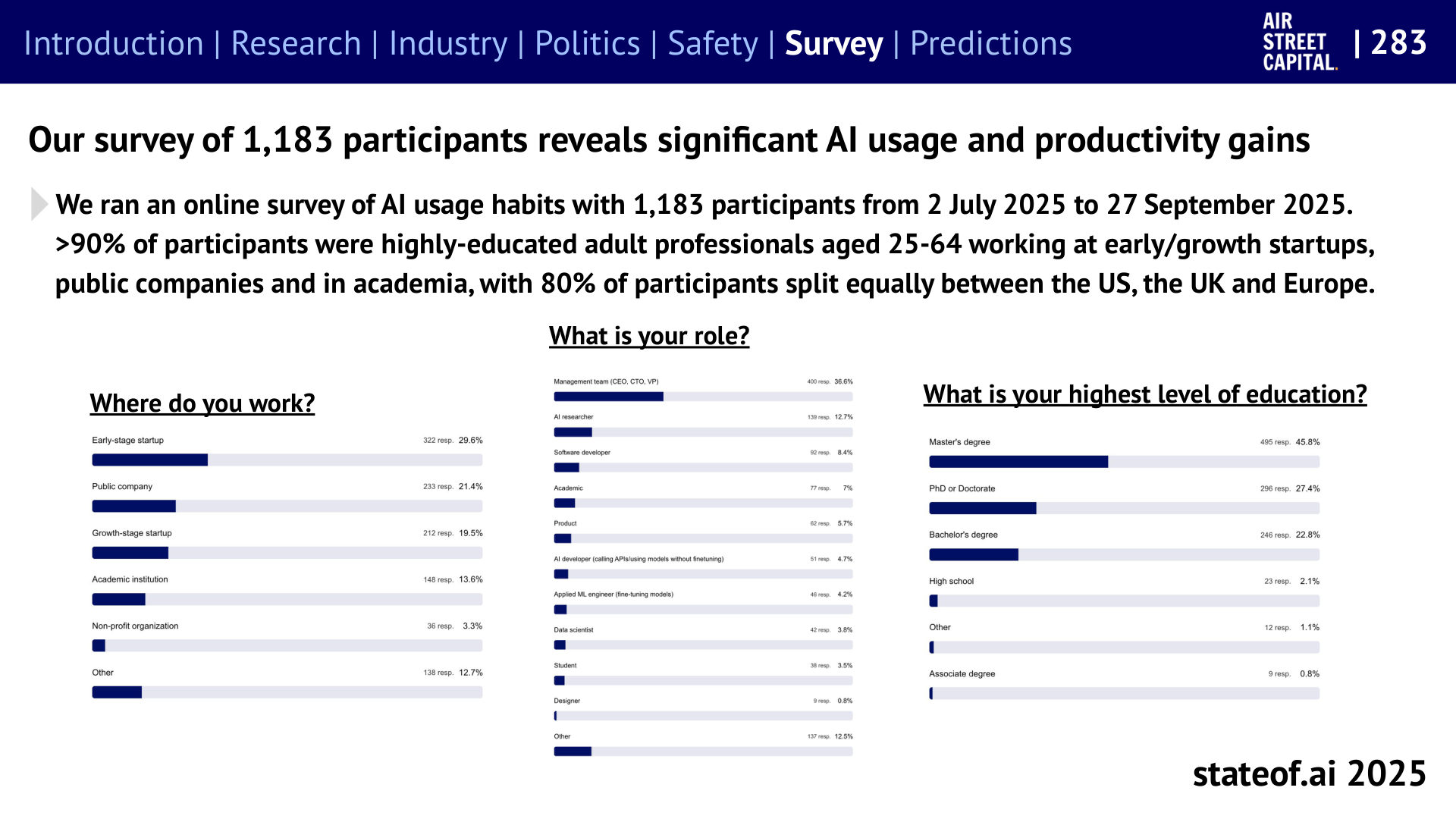
The report found more than 95% using AI at work and in their personal lives, and 76% paying out of pocket. Fifty-six percent reported spending more than $21 a month, while 9% spent more than $200. This was evidence of perceived usefulness among people already engaged with AI, rather than an estimate of national consumer adoption.
Productivity gains are reported, not experimentally measured
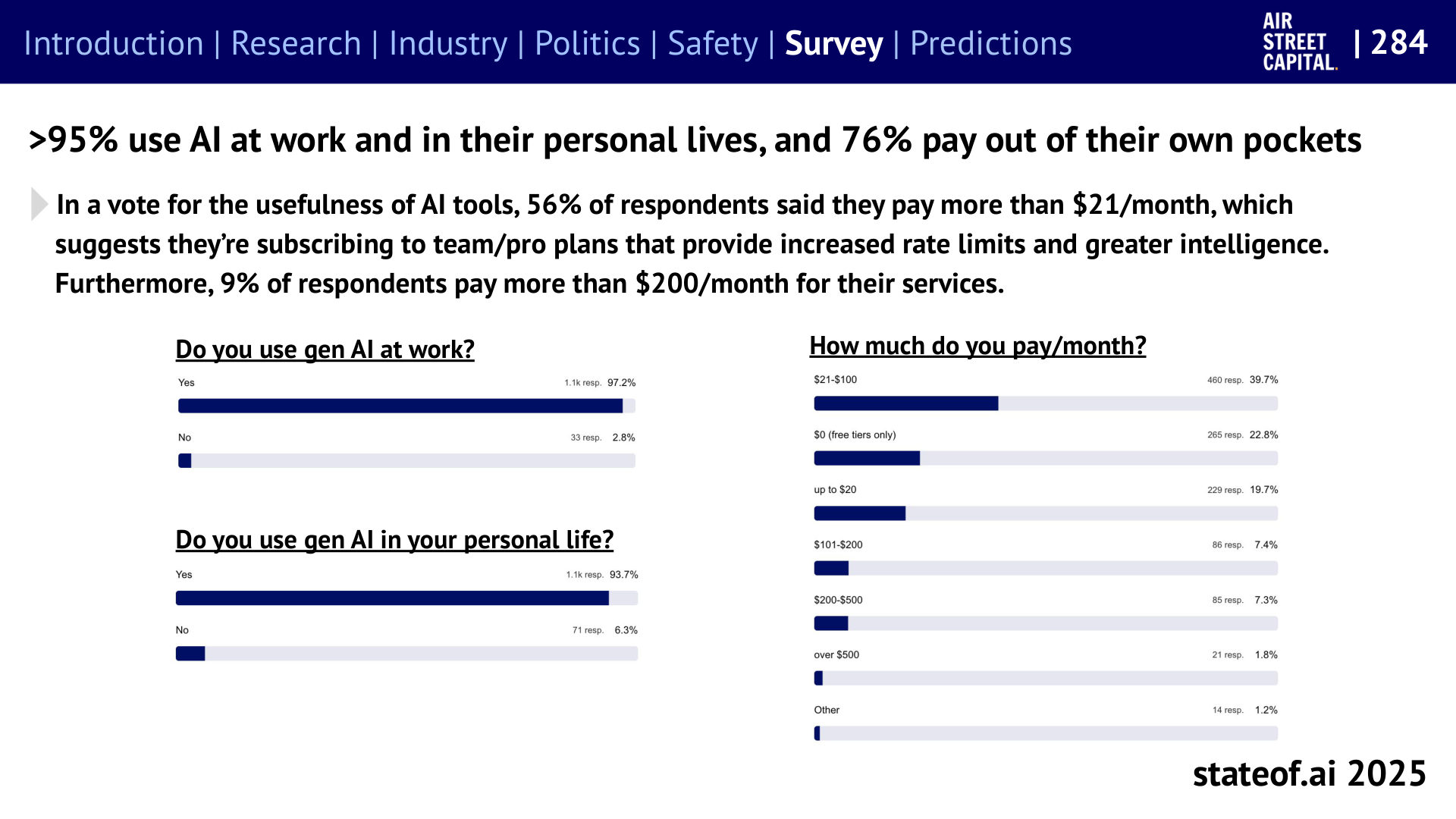
Ninety-two percent said their productivity had increased, including 47% reporting a significant increase. Two percent reported a decrease. These are respondents’ assessments, not a randomized measurement of output or time saved. The difference matters when comparing the survey with workplace experiments.
The barriers move from access to implementation
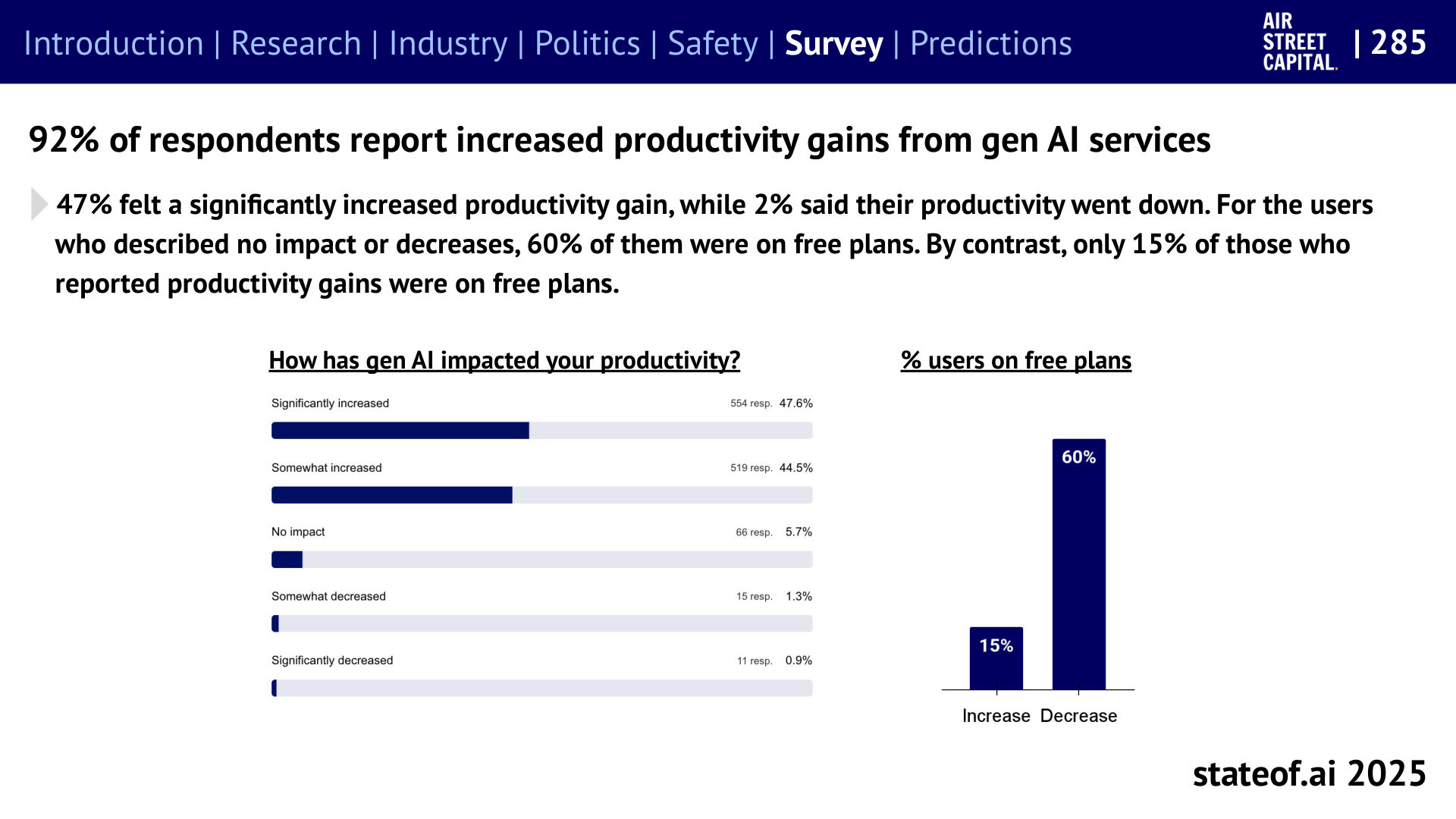
More than 70% reported growth in their organization’s generative-AI budget. Barriers included the time needed to make systems reliable, privacy concerns, lack of expertise, costs, integrations, and uncertain return on investment. The survey suggests that buying access and embedding useful AI into everyday work were different stages of adoption.