What did AI-designed genome editors achieve in 2024?
By Nathan Benaich (Air Street Capital) · 2024 report
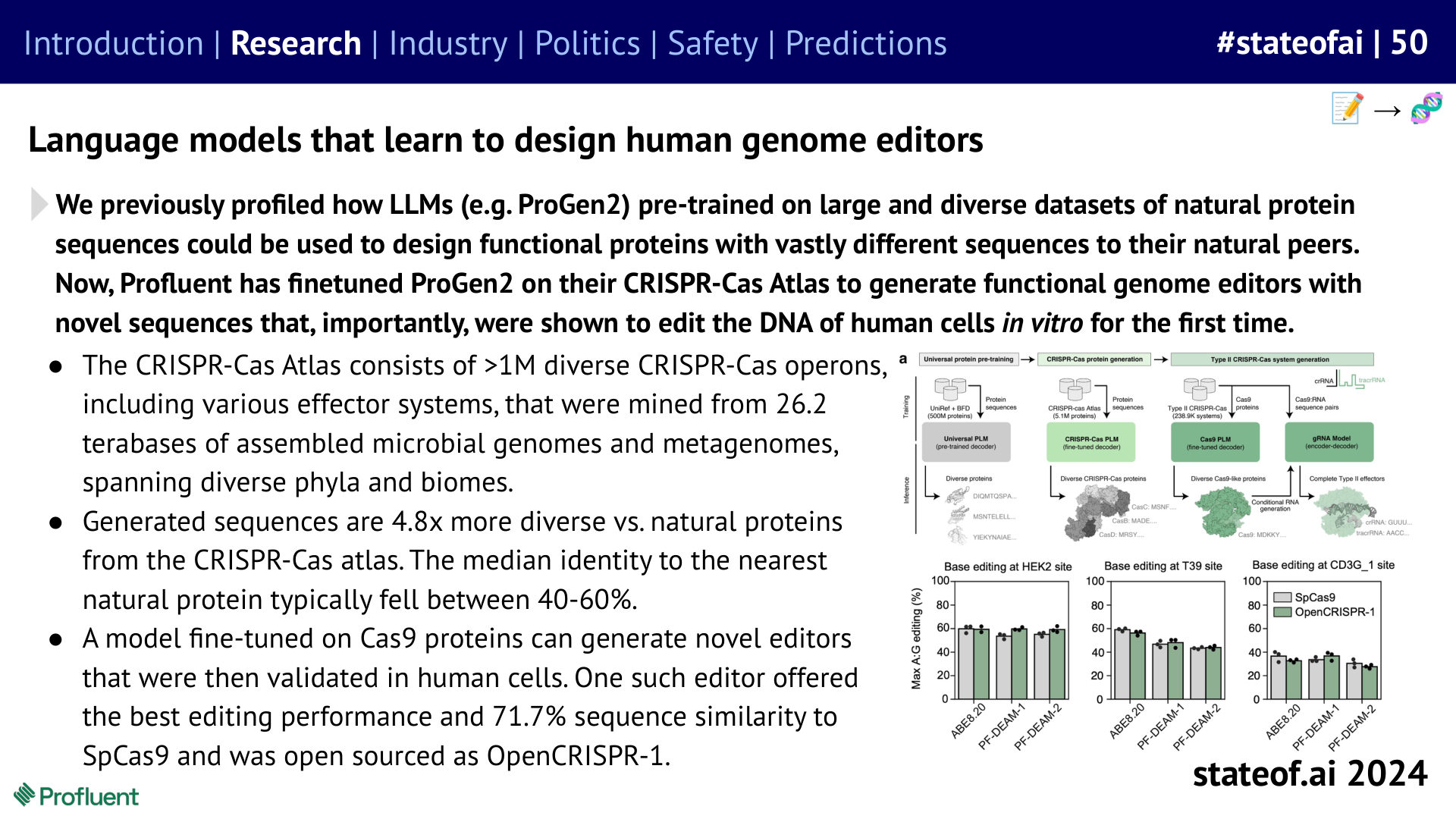
The Profluent work highlighted in the report generated novel genome editors and demonstrated DNA editing in human cells in vitro. It connected protein language modeling to experimentally validated function.
Sequence similarity is not biological efficacy. Cell-based experiments establish function under the tested conditions; they do not establish clinical safety or therapeutic effectiveness. AlphaFold 3 claims retain the access and baseline limitations noted in the original report.
Sequence similarity is not biological efficacy. Cell-based experiments establish function under the tested conditions; they do not establish clinical safety or therapeutic effectiveness. AlphaFold 3 claims retain the access and baseline limitations noted in the original report.
Historical snapshot published October 10, 2024. This web edition was prepared on October 10, 2026 from the online deck and original launch posts. Findings and forecasts retain their original time frame.
2024 report, slide 45 (PDF page 46)Original 2024 report. Printed slide numbers are one lower than PDF page numbers because the cover is unnumbered.
2024 report, slide 50 (PDF page 51)Original 2024 report. Printed slide numbers are one lower than PDF page numbers because the cover is unnumbered.
Benaich, Nathan. “What did AI-designed genome editors achieve in 2024?.” State of AI Report 2024. Historical report snapshot; web edition prepared 2026-10-10.