The 2022 report showed research turning into products while the financing environment weakened. Coding assistance reached a paid offering, AI-first drug-discovery pipelines advanced, and investment estimates fell from the previous year’s peak. These were different measures of commercial progress.
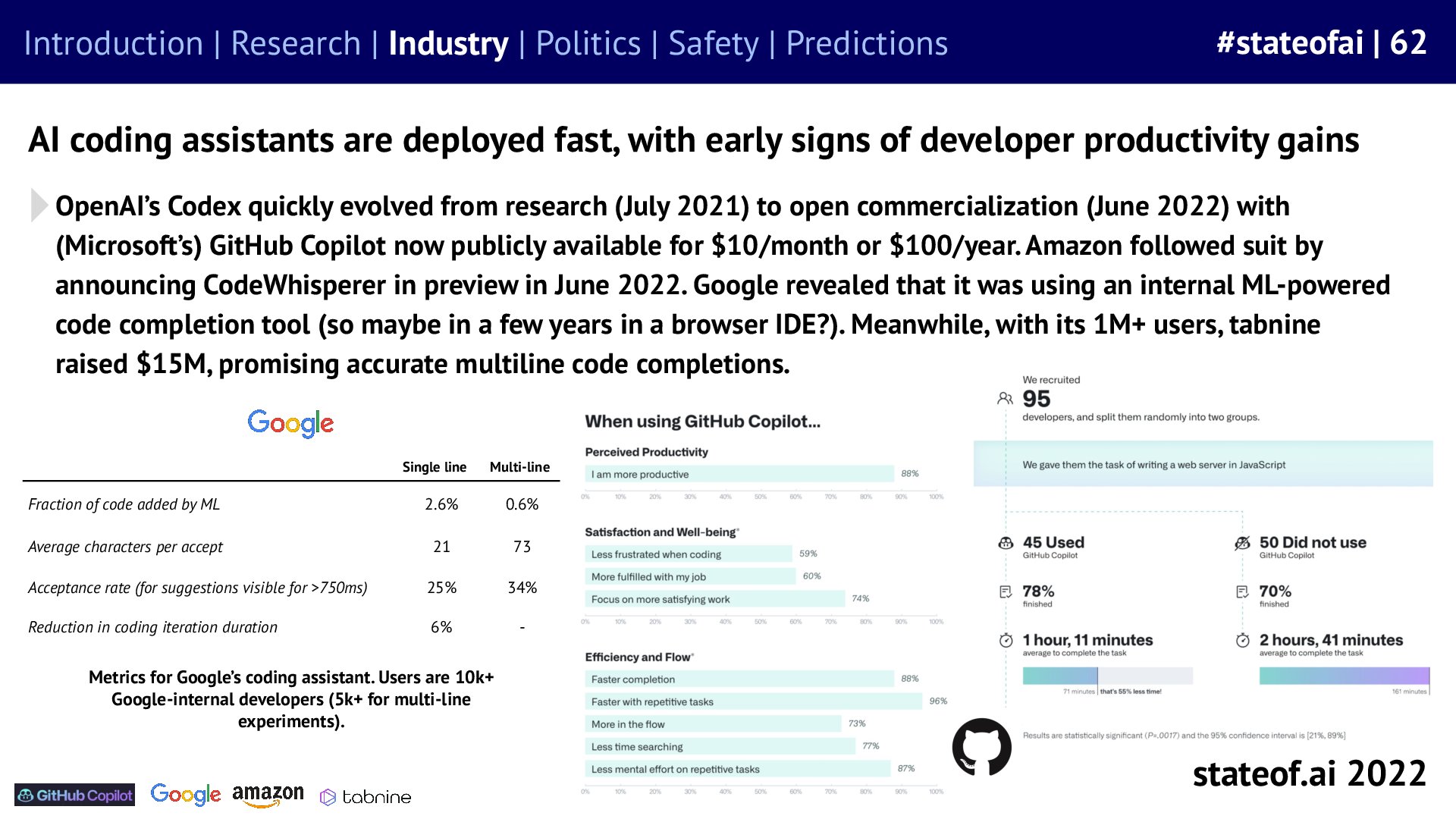
GitHub Copilot moved from a research-backed system into public commercial availability at $10 per month in the report’s account. It offered a concrete distribution channel for code generation inside developers’ existing tools, while usefulness still depended on reviewing the generated code.
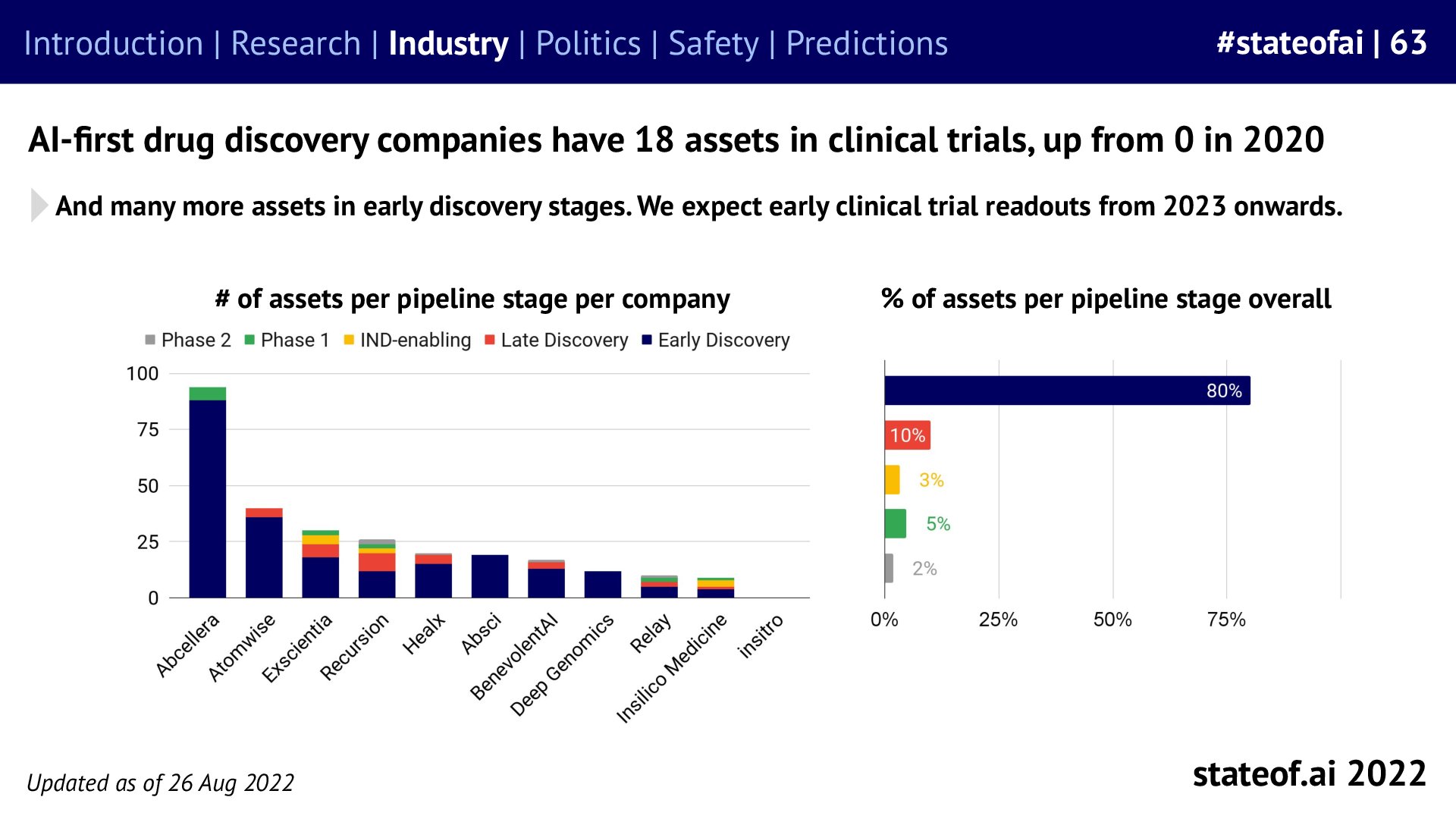
The report counted 18 assets in clinical trials from AI-first drug-discovery companies as of August 26, 2022. Trial entry was a meaningful development milestone, but the report expected early readouts in later years. The count did not establish that any particular program would succeed.
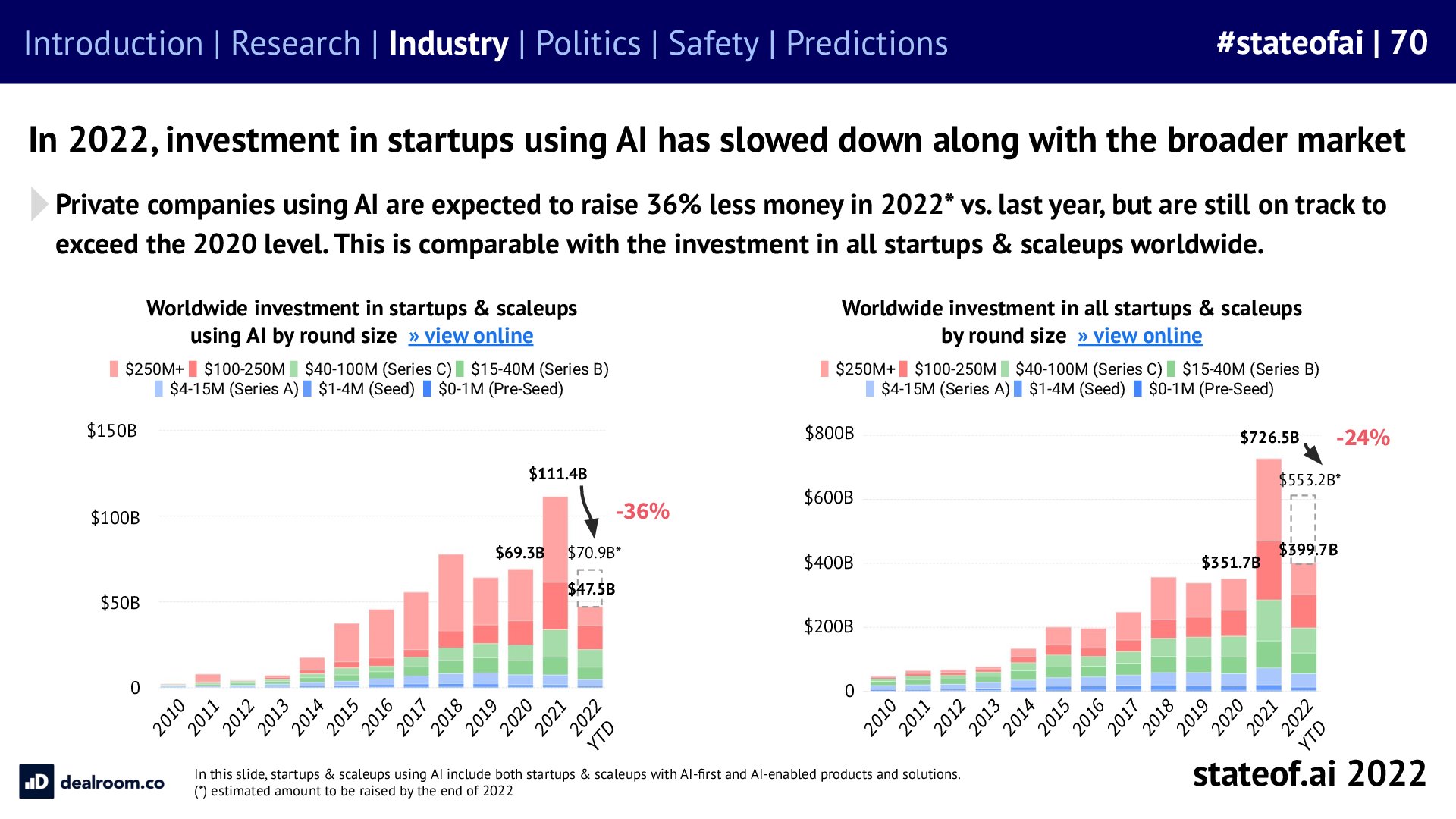
Private companies using AI were projected to raise 36% less in 2022 than in 2021, while remaining above 2020 levels. The dataset included both AI-first and AI-enabled companies, and the full-year amount was estimated rather than final.
A clinical pipeline was a portfolio of unresolved outcomes
The 18-asset count showed AI-first drug-discovery companies moving candidates into clinical testing. It did not mean 18 successful treatments. The distinction matters when comparing scientific progress with business traction: pipeline growth can precede both clinical readouts and evidence of commercial benefit.
Evidence you can use
AI business in the 2022 report
Historical snapshot: October 2022. Dates and populations are specified per row.
Prices are historical. Clinical assets are not approved therapies, and partial-year funding estimates should not be represented as final full-year totals.
The report contrasted its 2021 research launch with its June 2022 commercialization. The historical individual offer was priced at $10 per month or $100 per year.
The pipeline data were updated on August 26, 2022. Retaining that date helps distinguish a historical count from later additions, failures, or clinical readouts.
It compared expected 2022 funding for AI-first and AI-enabled startups with 2021. The report presented a projection for that dataset, not a completed year-end total.
No. The report said 2022 remained on track to exceed 2020 despite the projected decline from 2021. The choice of comparison year materially changed the picture.
Historical snapshot published October 11, 2022. This web edition was prepared on 2026-10-11 from the online deck and original launch posts. Findings and forecasts retain their original time frame.
Benaich, Nathan, and Ian Hogarth. “Products reach users as funding slows.” State of AI Report 2022. Historical report snapshot; web edition prepared 2026-10-11.