The work shifts from building models to running them
By Nathan Benaich and Ian Hogarth · 2020 report
The 2020 report tracked an industry learning how to operate AI products. Infrastructure and deployment tools became more prominent, and larger funding rounds continued during the pandemic. Useful models still needed reliable workflows and viable economics around them.
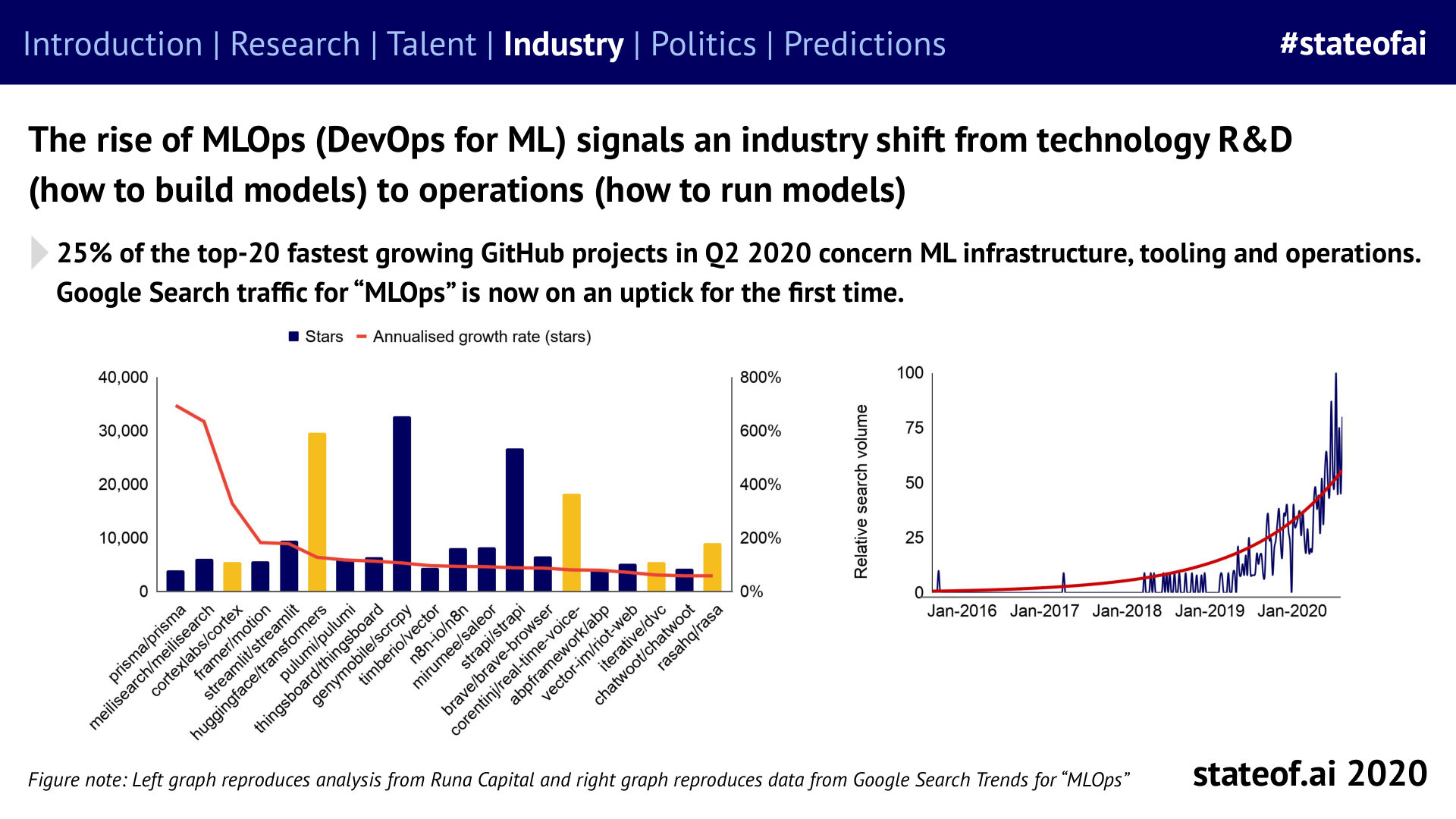
A quarter of the top 20 fastest-growing GitHub projects in Q2 2020 concerned ML infrastructure, tooling, or operations in the cited analysis. The report used this as evidence of a shift from model development toward running systems in production, not as an estimate of software-market share.
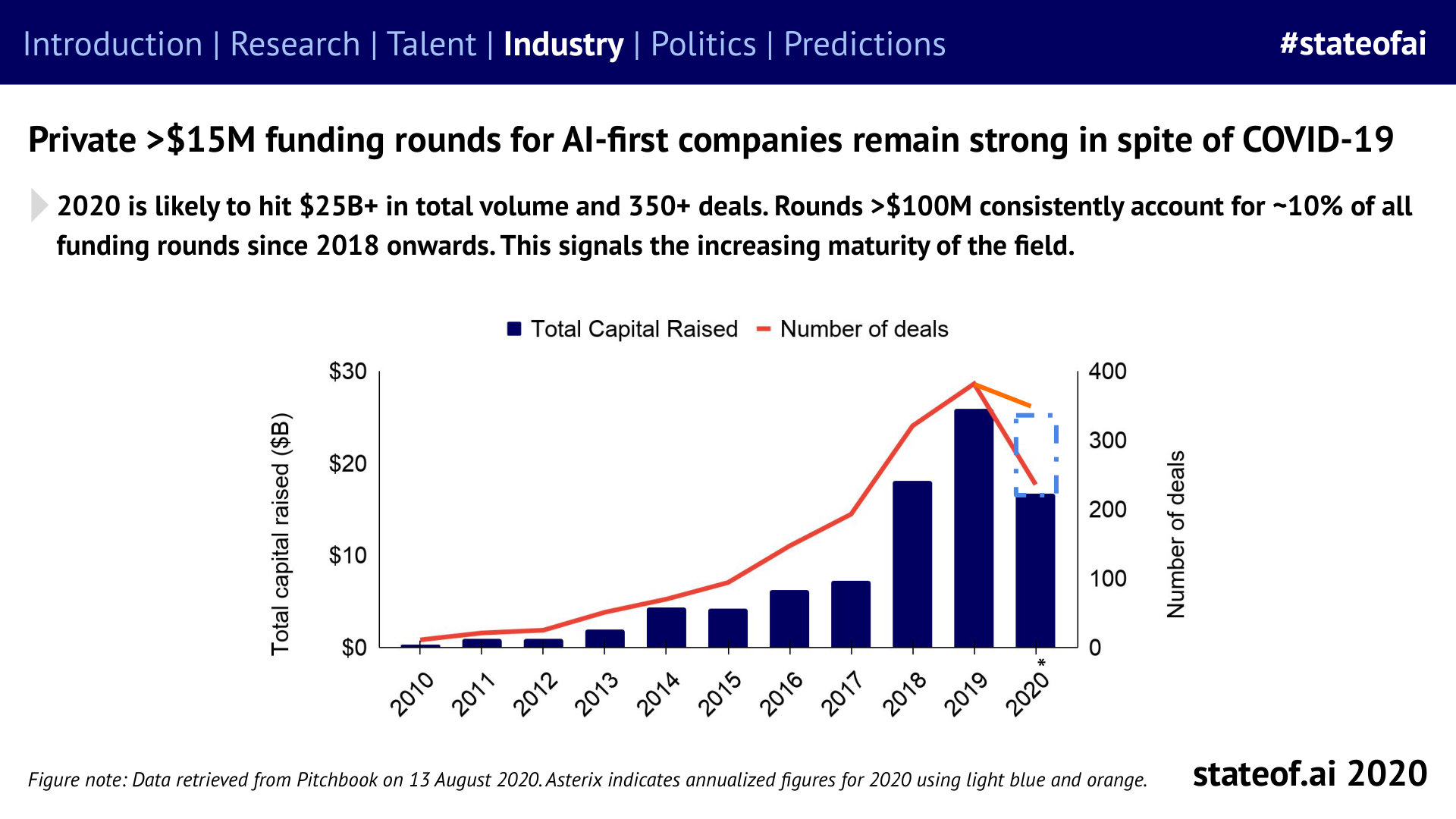
The report projected more than $25 billion across more than 350 private rounds above $15 million for AI-first companies in 2020. Those were annualized estimates based on data retrieved in August, not final full-year totals or a count of every AI financing.
Enterprise automation already had a substantial customer base
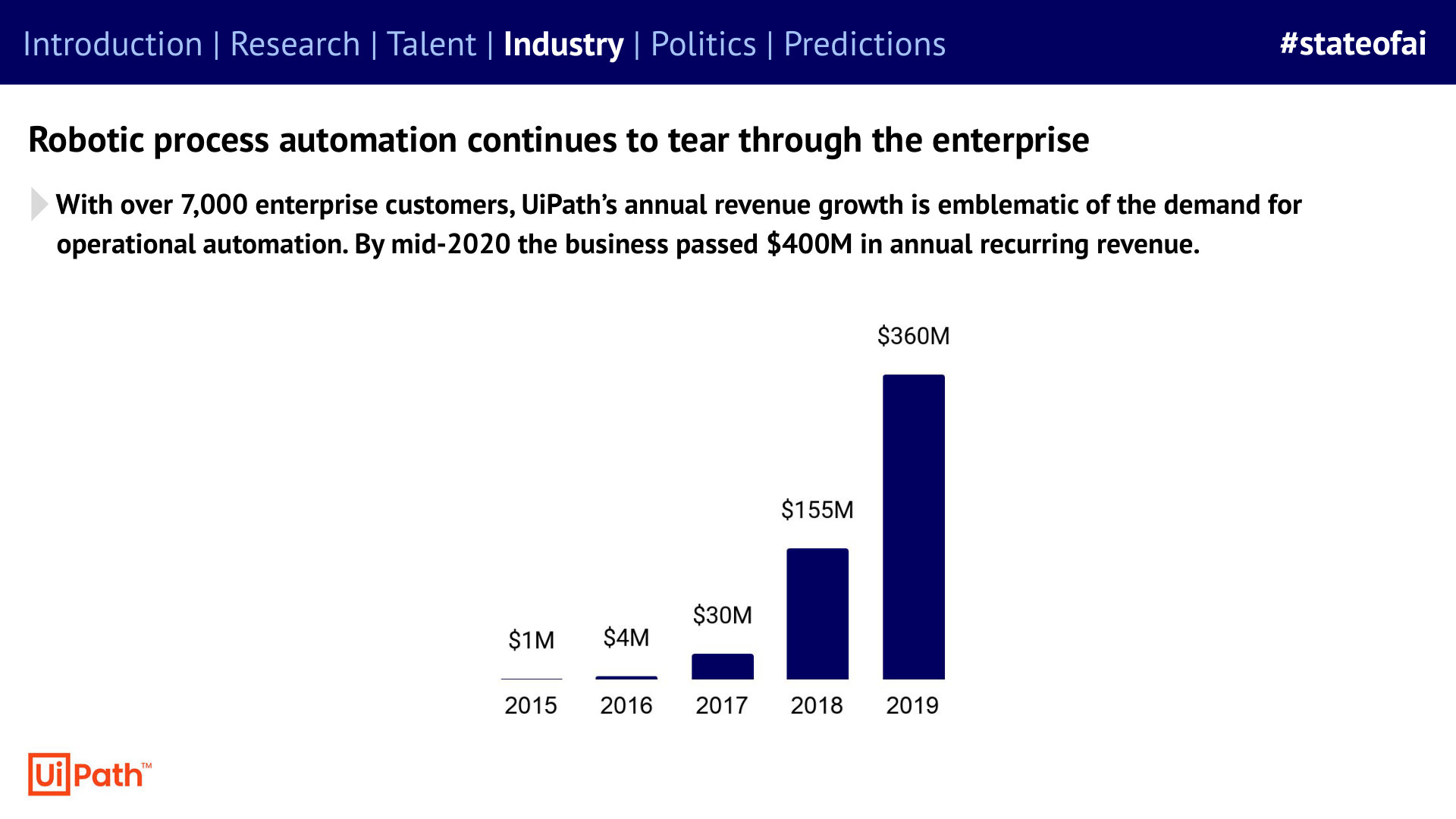
UiPath had more than 7,000 enterprise customers and passed $400 million in annual recurring revenue by mid-2020, according to the report. Robotic process automation provided a commercial example alongside the funding and MLOps discussion. The figures described demand for operational automation at one company, rather than revenue attributable to AI across the software industry.
GitHub growth is an adoption signal, not revenue. Funding figures cover selected larger rounds and were projected from partial-year data; they should not be compared directly with broader startup totals.
It referred to ML infrastructure, tooling, and operations among the top twenty fastest-growing GitHub projects in Q2 2020. It did not describe a quarter of all repositories or all software spending.
No. Growing attention to open-source projects showed developer interest. It did not directly measure paying customers, deployed systems, revenue, or retention at MLOps vendors.
The report described a move from focusing only on technology R&D and model building toward operating ML systems. That made deployment infrastructure a distinct part of the AI business landscape.
The analysis concerned private AI-first company rounds above $15 million. It excluded other financing populations, so the result should not be read as all money invested in anything related to AI.
It was an annualized count for the qualifying round population in the report. It was a projection from the available snapshot, not a finalized year-end transaction count.
The report said UiPath had more than 7,000 enterprise customers and passed $400 million in annual recurring revenue by mid-2020. These company-level figures illustrated demand for operational automation, not a market-wide estimate of AI revenue.
Historical snapshot published October 1, 2020. This web edition was prepared on 2026-10-11 from the online deck and original launch posts. Findings and forecasts retain their original time frame.
2020 report, PDF page 111Original 2020 report. This edition has no printed slide numbers. References use one-based PDF pages.
2020 report, PDF page 115Original 2020 report. This edition has no printed slide numbers. References use one-based PDF pages.
2020 report, PDF page 129Original 2020 report. This edition has no printed slide numbers. References use one-based PDF pages.
Benaich, Nathan, and Ian Hogarth. “The work shifts from building models to running them.” State of AI Report 2020. Historical report snapshot; web edition prepared 2026-10-11.