The 2019 report devoted a separate section to China. It examined both visible deployment and the harder question of strategic independence. Growth in research output and industrial automation coexisted with a continuing semiconductor trade deficit.
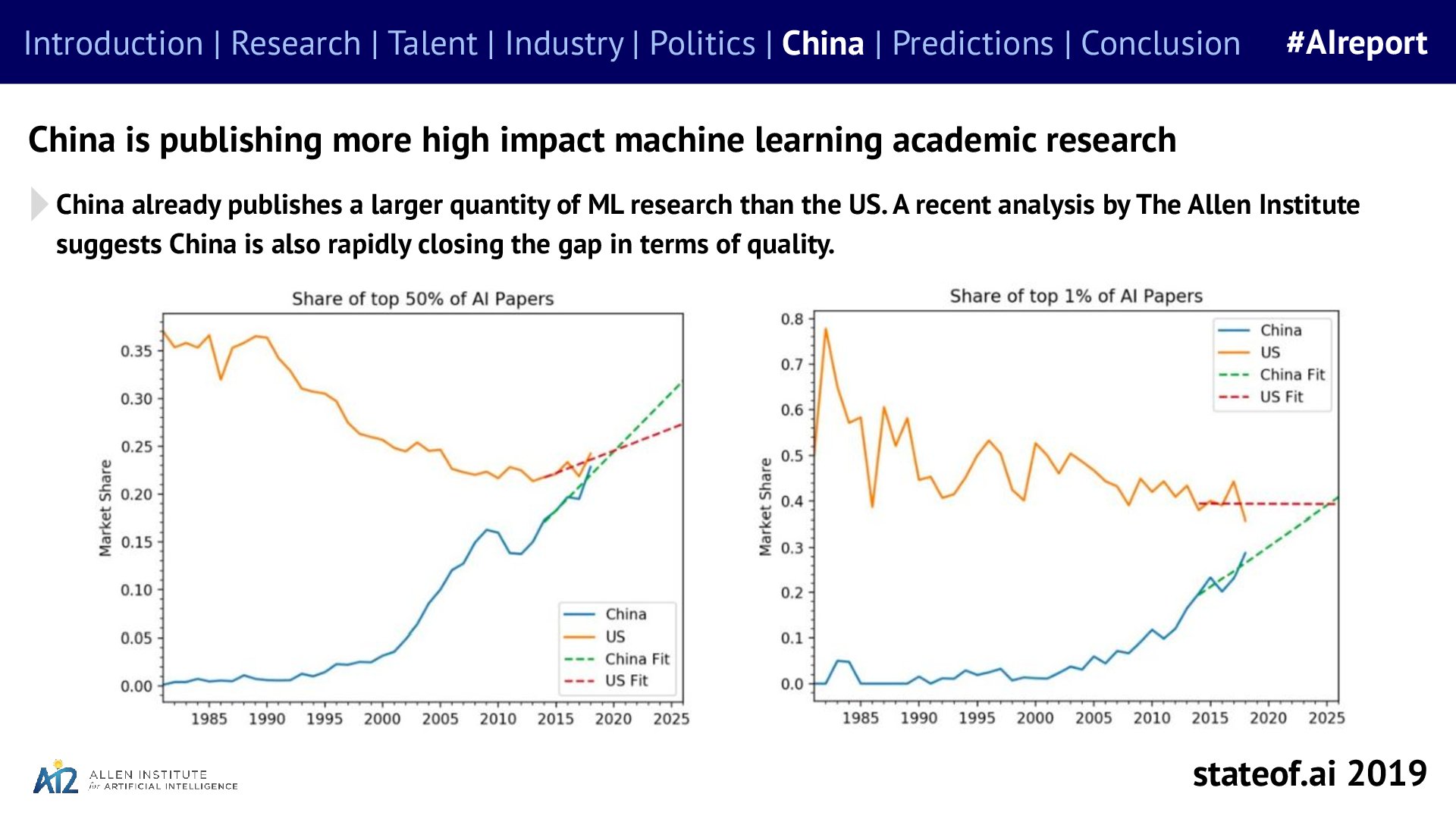
The report cited analysis suggesting that China was increasing its output of high-impact machine-learning papers. It distinguished publication quantity from research quality, treating citation-based measures as another perspective on the country’s progress.
A highly automated warehouse illustrates deployment
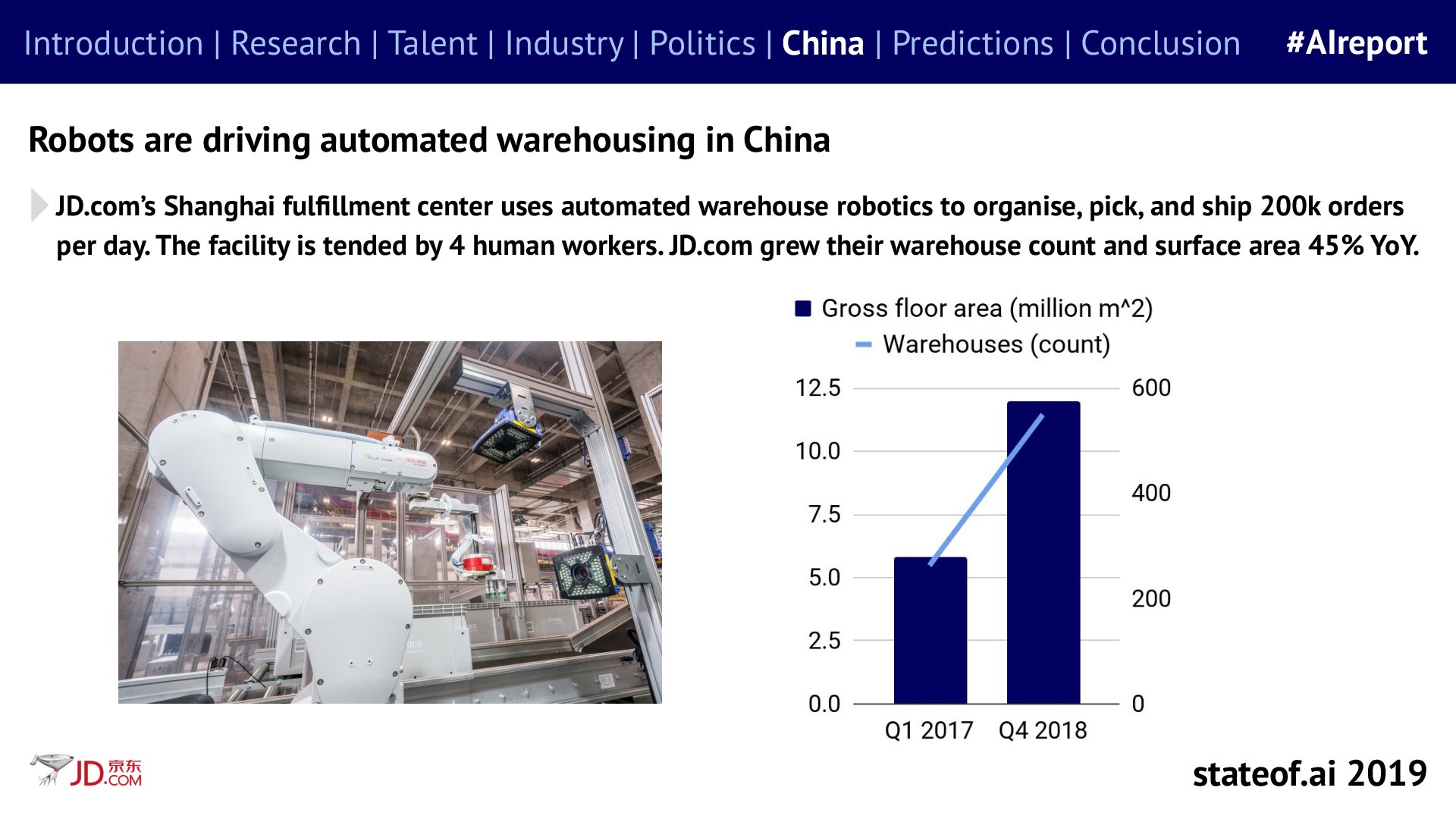
JD.com’s Shanghai fulfillment center was reported to handle 200,000 orders per day with four workers tending the facility. This was a selected facility example, not the staffing pattern of every warehouse or a measure of economy-wide job displacement.
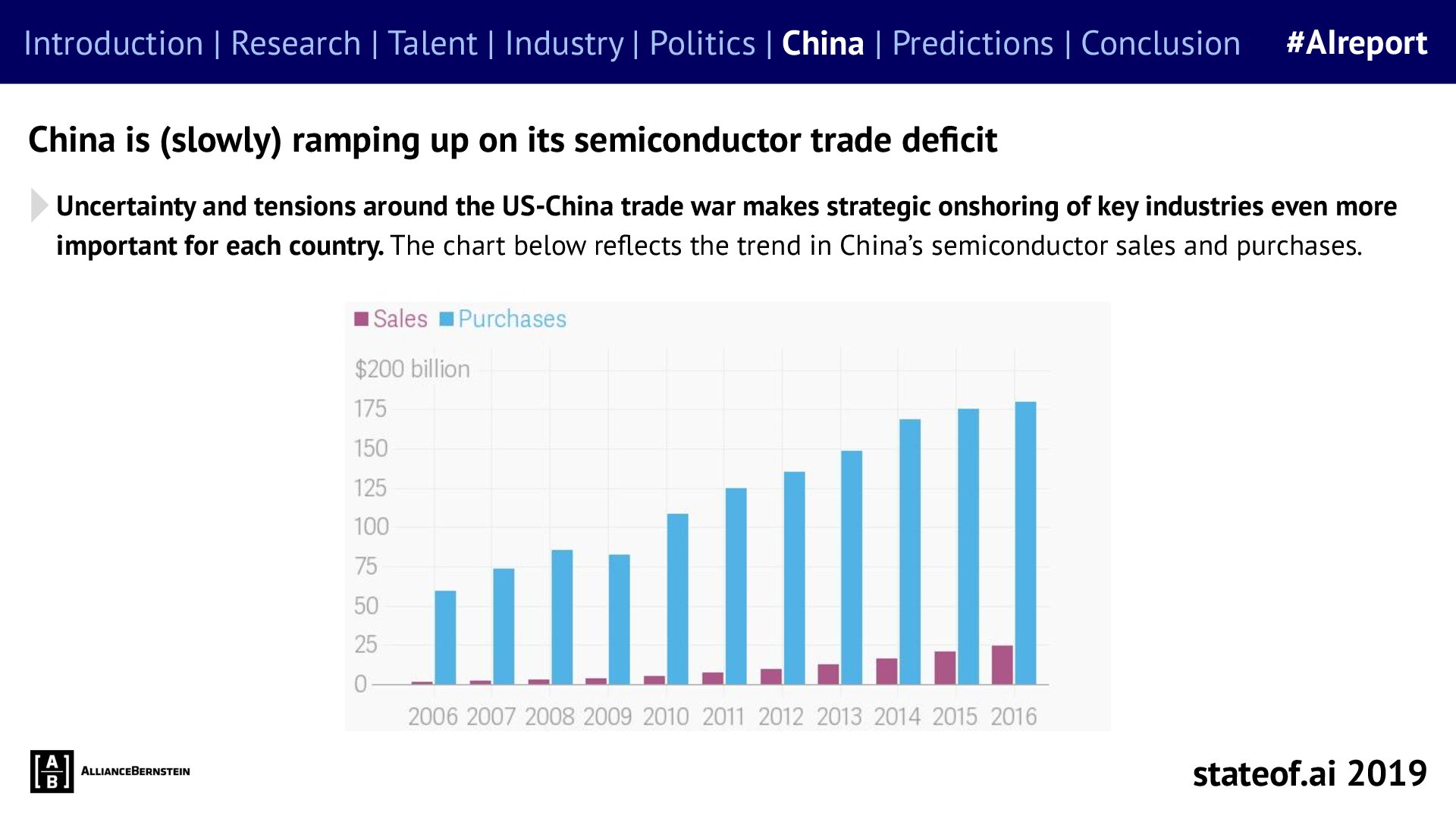
The report connected China’s chip trade deficit with US-China trade tensions. The ability to deploy AI did not imply independence in the hardware supply chain, making semiconductor access part of the broader competition.
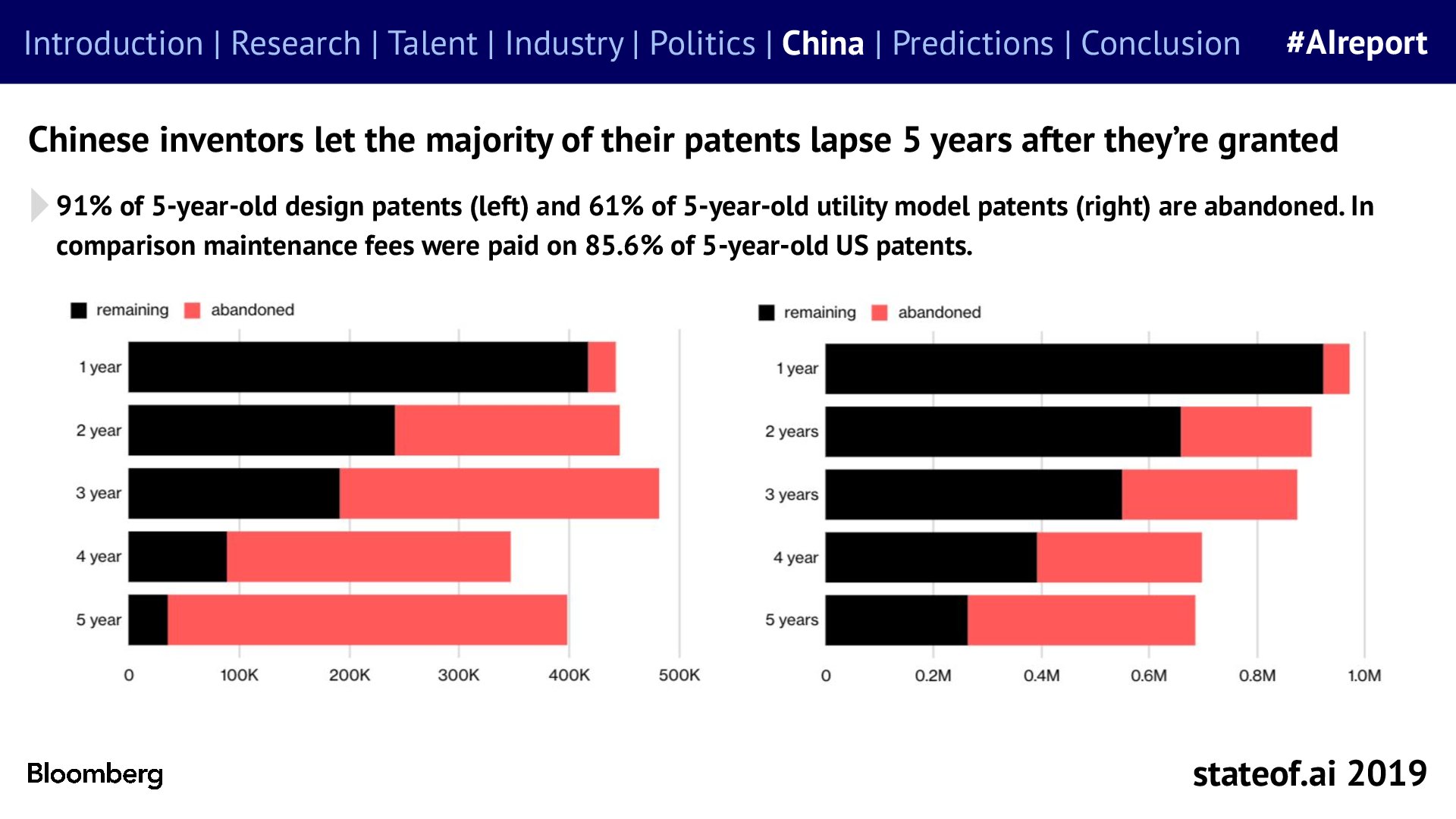
The report examined whether patent holders continued to pay to maintain their rights. It found that 91% of five-year-old Chinese design patents and 61% of five-year-old utility model patents had been abandoned. These were different patent categories, so their counts and renewal patterns needed to be read separately. High filing volume alone did not establish durable commercial value.
The warehouse example is site-specific and does not count every worker across JD.com’s supply chain. Citation indicators are proxies for research impact, and neither measure establishes overall national AI leadership.
It highlighted a JD.com Shanghai facility reported to handle 200,000 orders per day with four workers tending it. The example described one facility, not the wider logistics workforce.
It cited an Allen Institute analysis of AI publication volume and high-impact papers. The discussion concerned changing research output and quality measures, rather than a single all-purpose country ranking.
Renewal behavior added context to filing totals. The report said 91% of five-year-old design patents and 61% of five-year-old utility model patents in China had been abandoned. These category-specific figures challenged a simple equation between more patents and more valuable inventions.
It described a selected Shanghai fulfillment center using automated robots to organize, pick, and ship orders. It was a concrete deployment example rather than a census of Chinese warehouses.
No. It referred to the selected JD.com facility described in the report. Different facilities, tasks, and support arrangements could not be inferred from that one example.
The report emphasized that demand for chips still outstripped domestic production. That gap linked the ability to deploy AI systems to supply chains and access to foreign technology.
It made the availability of key inputs a strategic concern alongside research and deployment. The report therefore treated semiconductor access as a separate constraint on industrial ambitions.
Historical snapshot published June 28, 2019. This web edition was prepared on 2026-10-11 from the online deck and original launch posts. Findings and forecasts retain their original time frame.
2019 report, PDF page 123Original 2019 report. This edition has no printed slide numbers. References use one-based PDF pages.
2019 report, PDF page 125Original 2019 report. This edition has no printed slide numbers. References use one-based PDF pages.
2019 report, PDF page 128Original 2019 report. This edition has no printed slide numbers. References use one-based PDF pages.
2019 report, PDF page 129Original 2019 report. This edition has no printed slide numbers. References use one-based PDF pages.
Benaich, Nathan, and Ian Hogarth. “China expands research and industrial deployment.” State of AI Report 2019. Historical report snapshot; web edition prepared 2026-10-11.