How to read this finding
Talent estimates, paper authorship, and conference attendance have different denominators. They should not be combined into a single workforce estimate. Diversity data were incomplete.
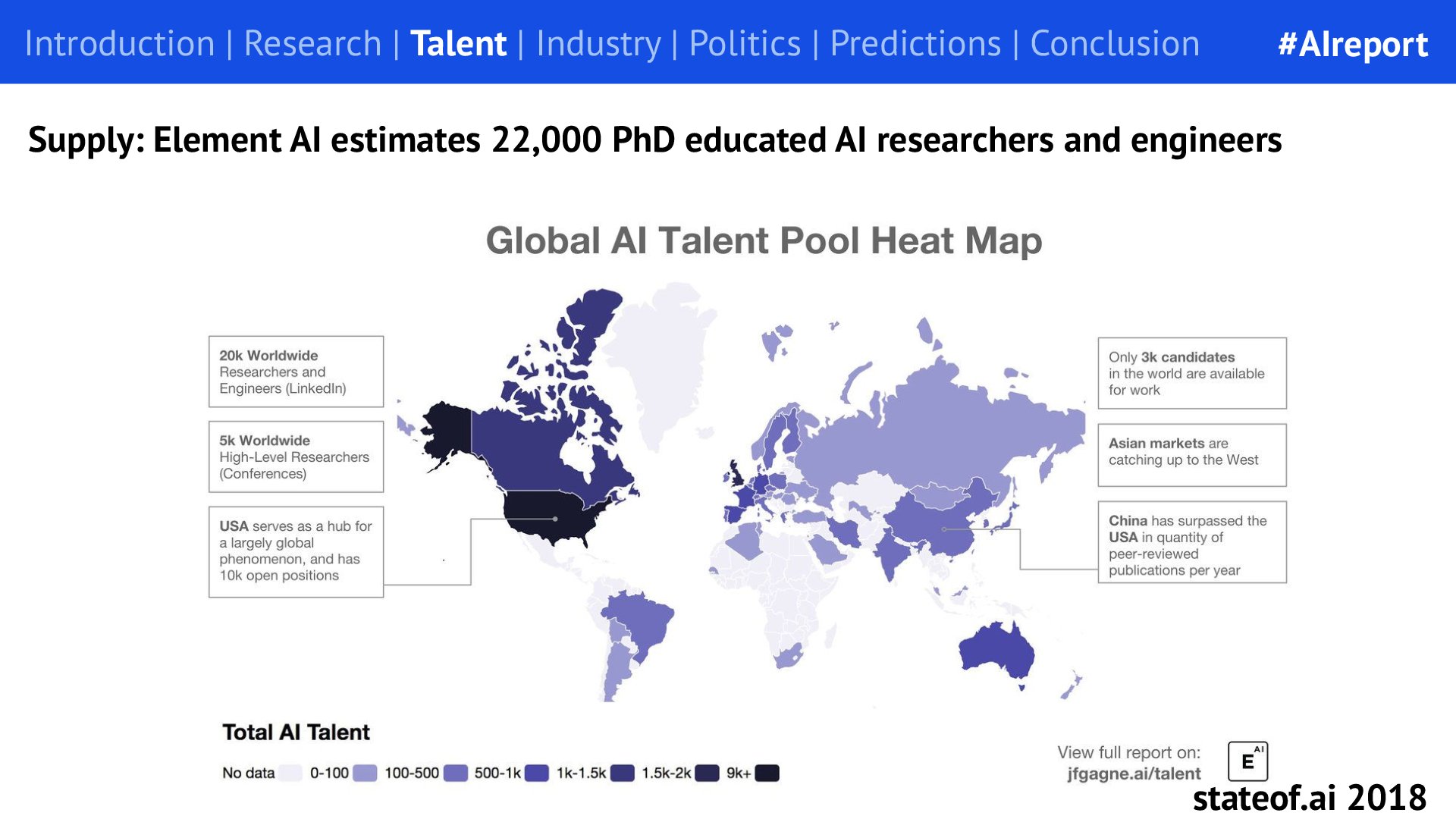
It cited an Element AI estimate of 22,000 PhD-educated AI researchers and engineers. That figure covered a defined specialist population, not every developer or practitioner using AI.
Talent estimates, paper authorship, and conference attendance have different denominators. They should not be combined into a single workforce estimate. Diversity data were incomplete.
Evidence you can use
Historical snapshot: June 2018. Dates and populations are specified per row.
| Measure | Reported value | Definition and source |
|---|---|---|
| Specialist talent estimate | 22,000 | Element AI estimate of PhD-educated AI researchers and engineers.2018 report, PDF page 57 |
| ICML papers with Google/DeepMind author | 6.3% | Share of ICML 2017 papers in the cited analysis.2018 report, PDF page 61 |
| Women among NIPS registrations | 17% | Share of registrations in 2017; not all AI researchers.2018 report, PDF page 68 |
Talent estimates, paper authorship, and conference attendance have different denominators. They should not be combined into a single workforce estimate. Diversity data were incomplete.
Historical snapshot published June 29, 2018. This web edition was prepared on 2026-10-11 from the online deck and original launch posts. Findings and forecasts retain their original time frame.
Benaich, Nathan, and Ian Hogarth. “How large was the AI talent pool in the 2018 report?” State of AI Report 2018. Historical report snapshot; web edition prepared 2026-10-11.