NVIDIA’s lead grows into an infrastructure question
By Nathan Benaich (Air Street Capital) · 2024 report
NVIDIA remained central to the AI buildout in 2024. Its chips dominated the research footprint tracked by the report, while the infrastructure required to use them began to collide with power availability and technology companies’ climate commitments.
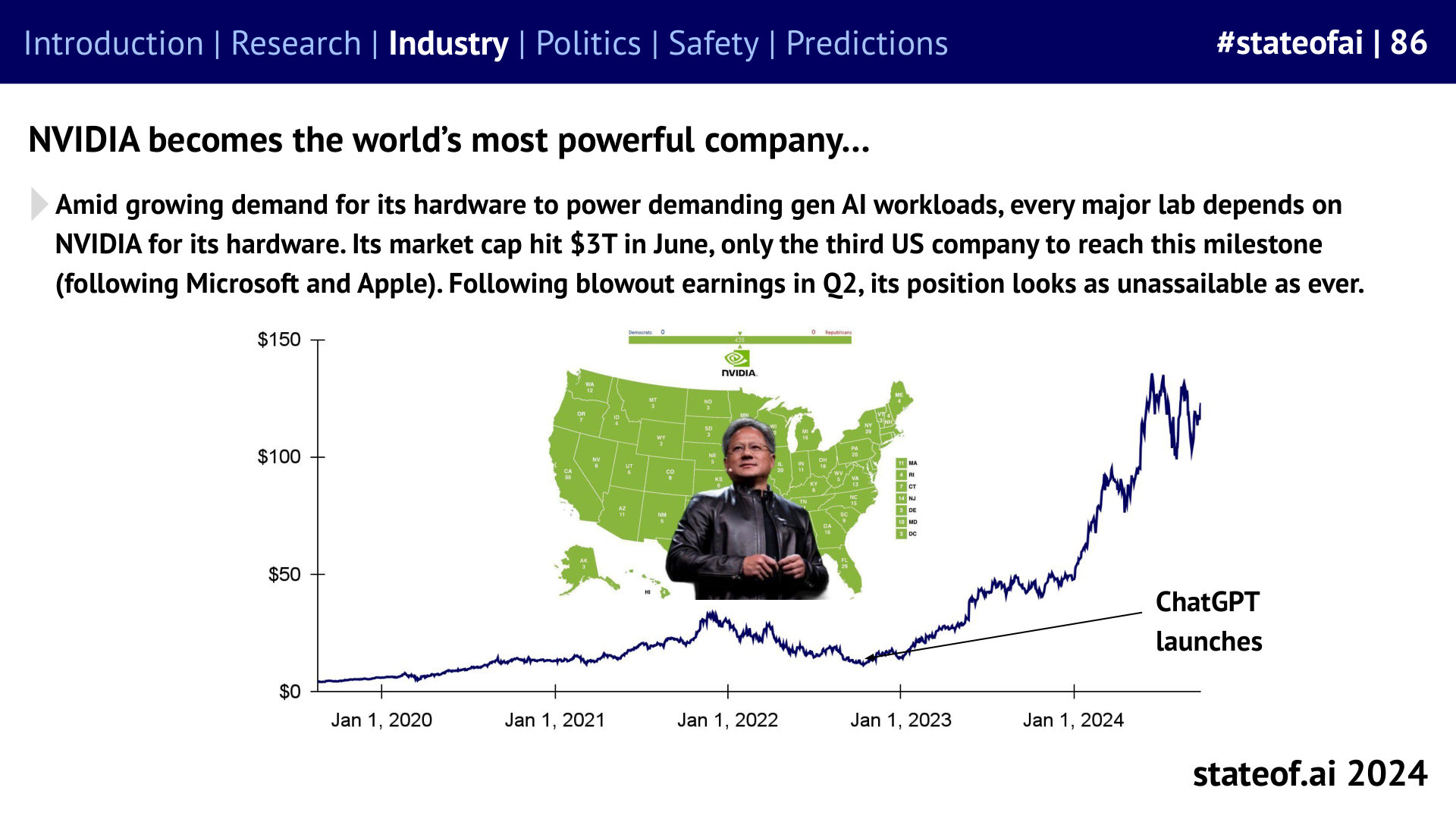
NVIDIA reached a $3 trillion market capitalization in June 2024 as major AI labs depended on its hardware. The report connected that financial milestone to the demand for large training and inference systems, while also examining whether the wider industry could earn returns on its infrastructure spending.
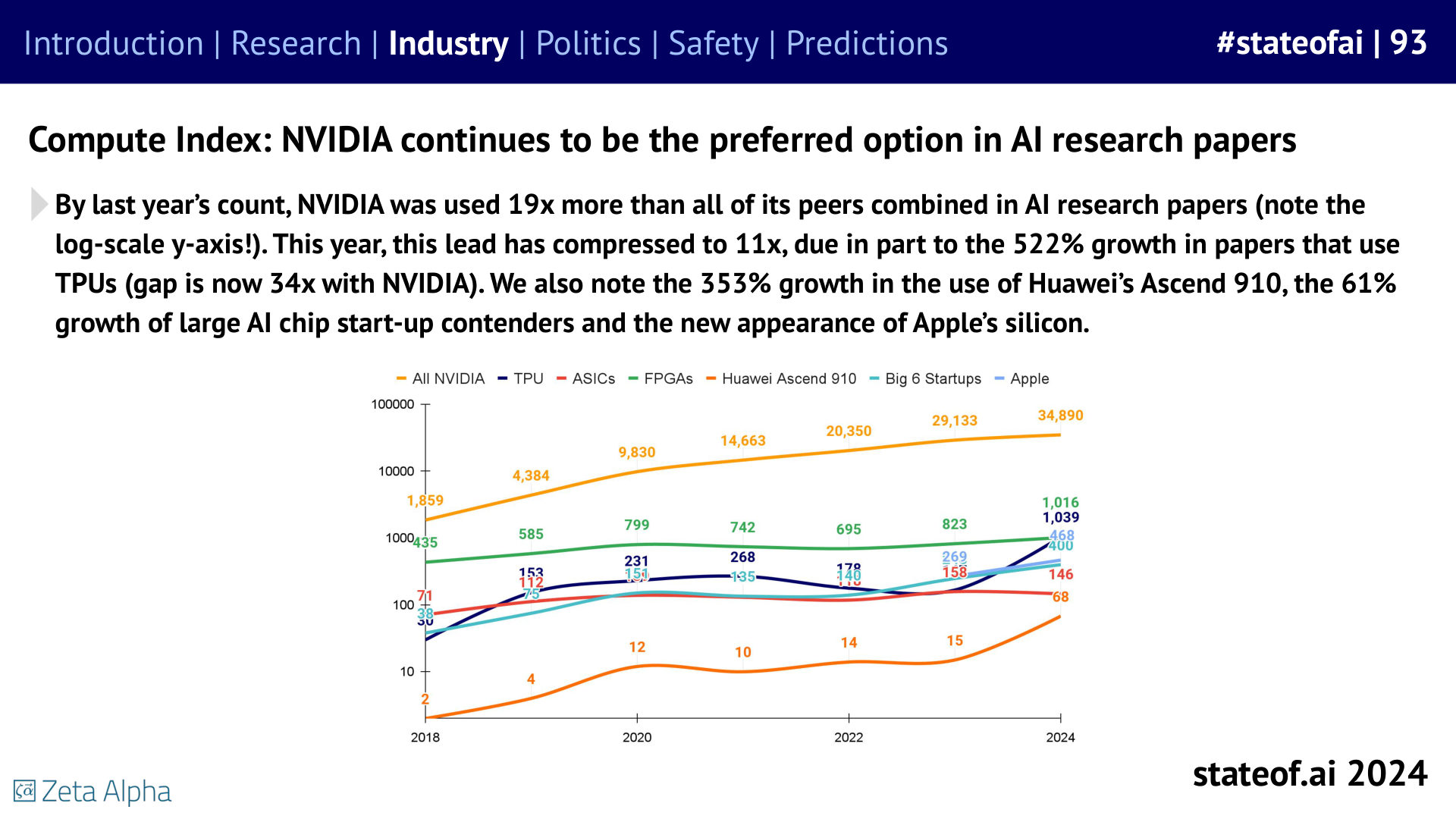
The Compute Index found NVIDIA mentioned in AI research papers 11 times as often as all its peers combined. That ratio had narrowed from 19 times in the previous report as alternatives grew, including TPUs and Huawei Ascend. Paper mentions showed which hardware researchers used and reported; they were not a measure of chip revenue or installed capacity.
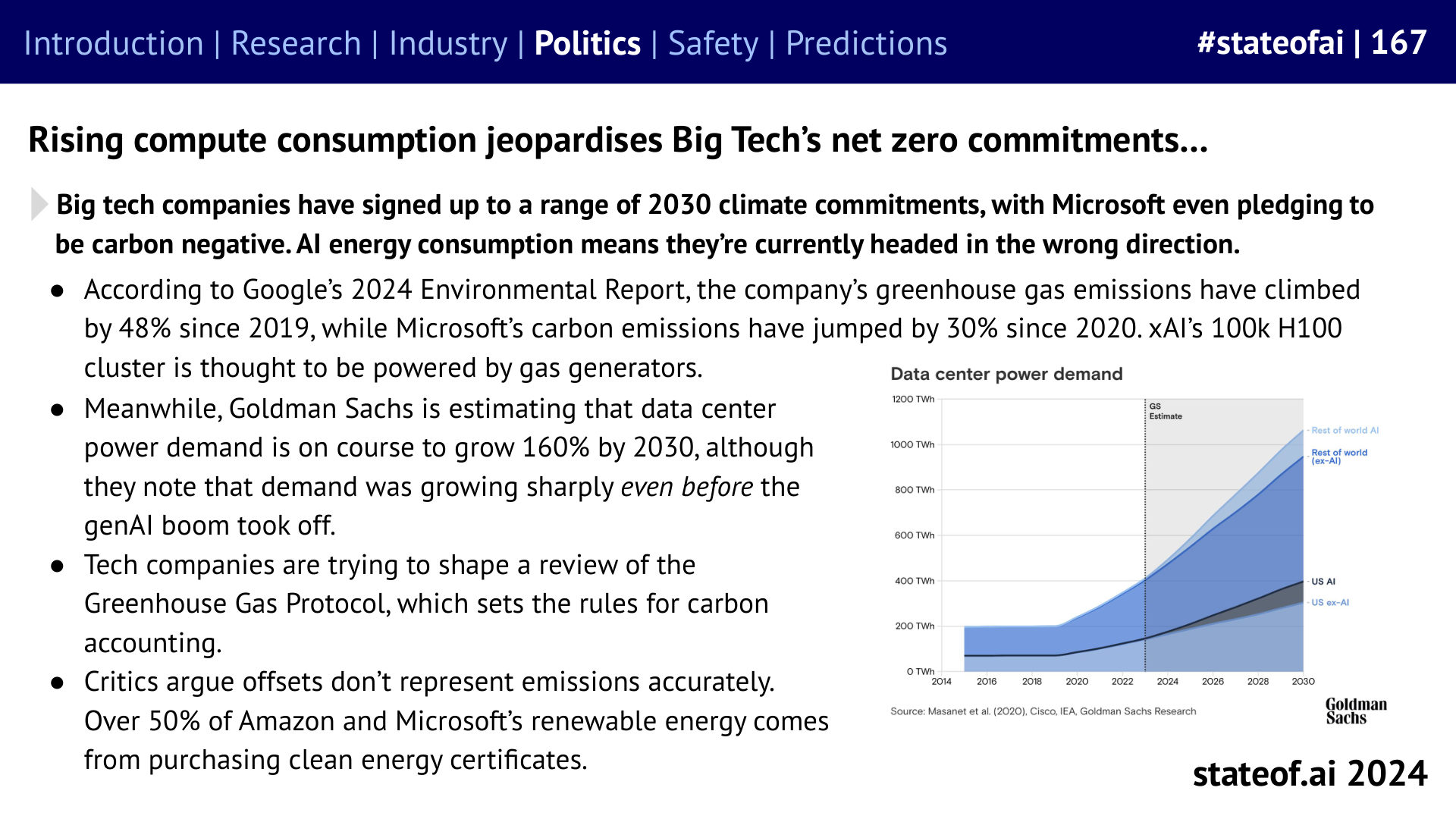
The report cited rising emissions at Google and Microsoft and growing demand for data-center electricity. It also distinguished forecasts from observed results: the projected increase in power demand by 2030 was an estimate, while company emissions figures described past changes. The buildout’s constraints extended beyond access to GPUs.
Company emissions did not isolate the footprint of AI
The report connected data-center growth with pressure on climate commitments, but the company figures covered more than AI alone. A useful reading separates observed company-wide emissions changes from forecasts of future power demand. Neither number directly measures the energy used by a particular model or training run.
Evidence you can use
Compute in the 2024 report
Historical snapshot: October 2024. Dates and populations are specified per row.
Research-paper usage is not market share. Company emissions cover activities beyond AI, so the reported changes cannot be attributed wholly to AI workloads. Forward projections elsewhere in the deck remain forecasts.
The report’s Compute Index found NVIDIA used 11 times as often as all peer chips combined in the research papers it tracked, down from a 19-fold lead in the previous edition.
Growing data-center requirements put pressure on power infrastructure and corporate climate commitments. The report documented rising company-wide emissions while discussing further demand growth.
It narrowed from 19 times alternatives combined to 11 times peers combined in the report’s Compute Index comparison. That suggested greater alternative use while NVIDIA retained a large lead.
No. It concerned hardware identified in research papers. Sales, installed hardware, and utilization required different evidence and could not be read directly from the ratio.
The 48% change from 2019 was company-wide. The report discussed AI and data-center demand as pressures, but the figure did not isolate an AI-only contribution.
The report compared Microsoft’s company-wide carbon emissions with 2020. That differed from Google’s 2019 baseline and should remain visible in any comparison.
A forecast describes a possible future under assumptions; an emissions report describes a measured past period. Combining them as if both were already observed would overstate the evidence.
Historical snapshot published October 10, 2024. This web edition was prepared on October 10, 2026 from the online deck and original launch posts. Findings and forecasts retain their original time frame.
2024 report, slide 86 (PDF page 87)Original 2024 report. Printed slide numbers are one lower than PDF page numbers because the cover is unnumbered.
2024 report, slide 93 (PDF page 94)Original 2024 report. Printed slide numbers are one lower than PDF page numbers because the cover is unnumbered.
2024 report, slide 167 (PDF page 168)Original 2024 report. Printed slide numbers are one lower than PDF page numbers because the cover is unnumbered.
Benaich, Nathan. “NVIDIA’s lead grows into an infrastructure question.” State of AI Report 2024. Historical report snapshot; web edition prepared 2026-10-10.