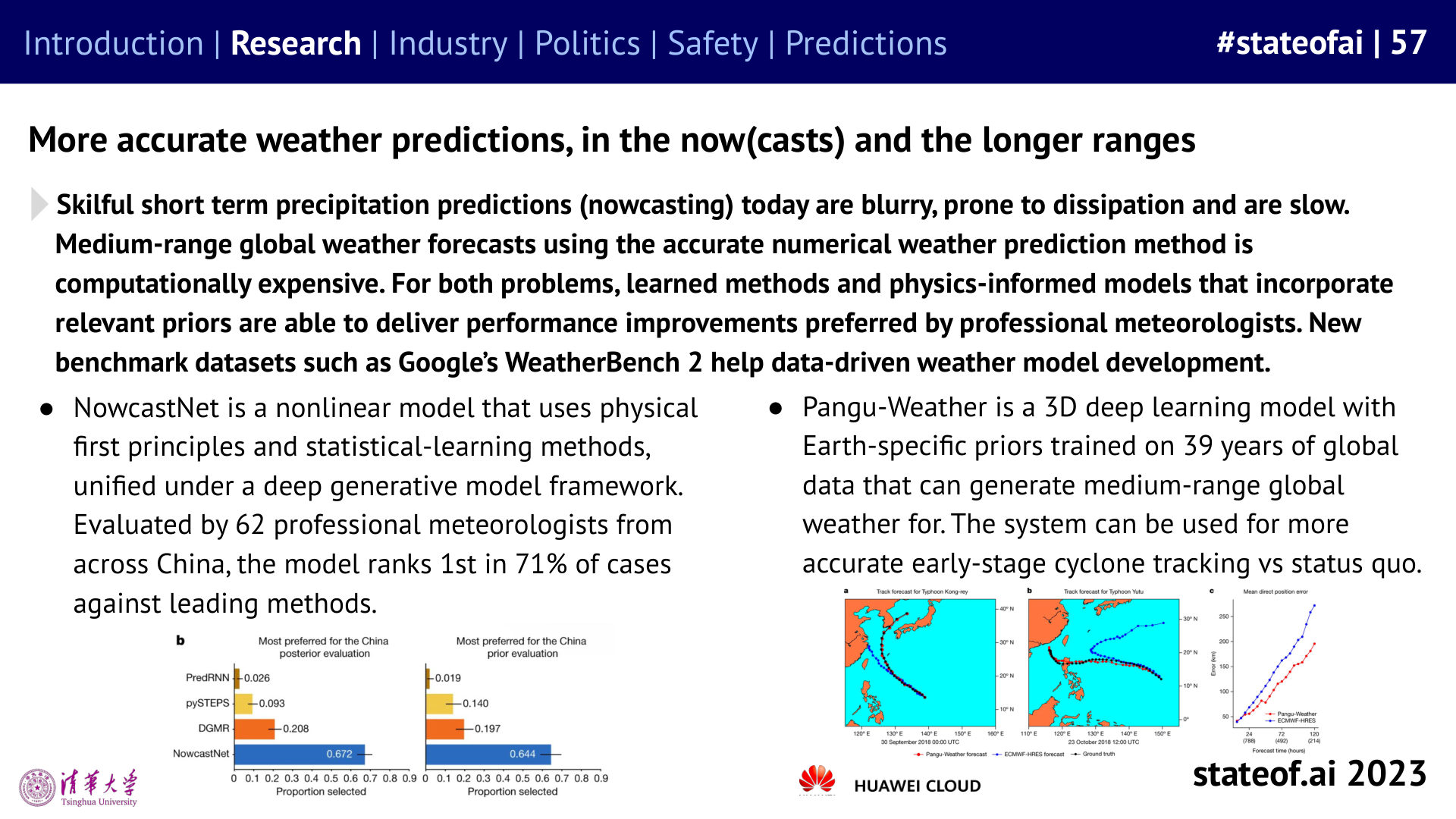
Diffusion becomes a tool for protein design
RFdiffusion adapted a structure-prediction network into a generative system for protein backbones. Researchers could specify desired structural features, then use ProteinMPNN to design sequences for those structures. This created a way to propose new proteins with particular shapes and functions, with experimental testing still essential to determine what worked.
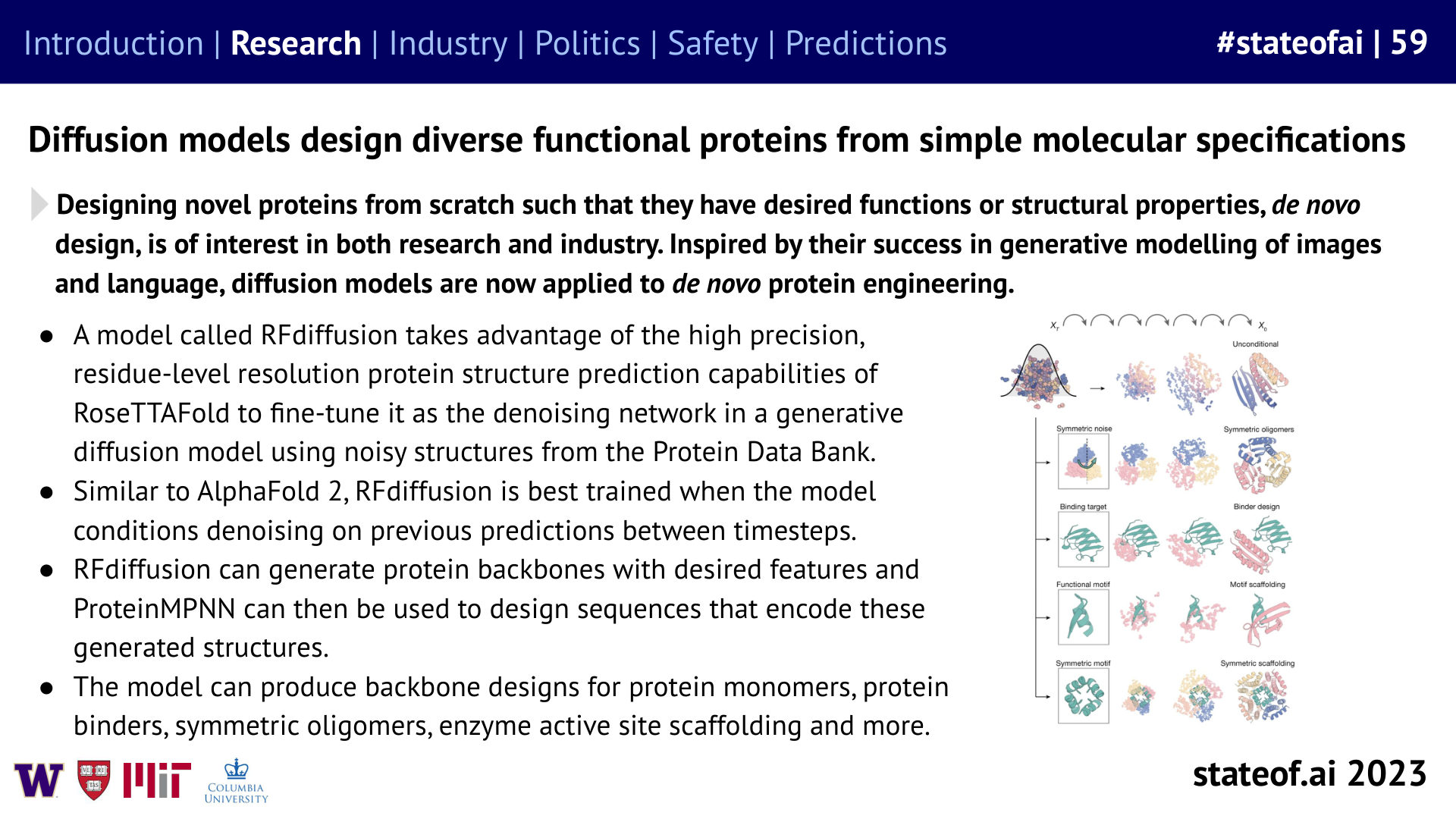
AlphaMissense maps possible effects of genetic changes
AlphaMissense combined structural context and protein language modeling to predict the effects of 71 million missense variants. The report noted that most observed variants lacked confirmed clinical classifications. Its predicted labels expanded the information available to researchers, while remaining predictions rather than confirmed diagnoses.
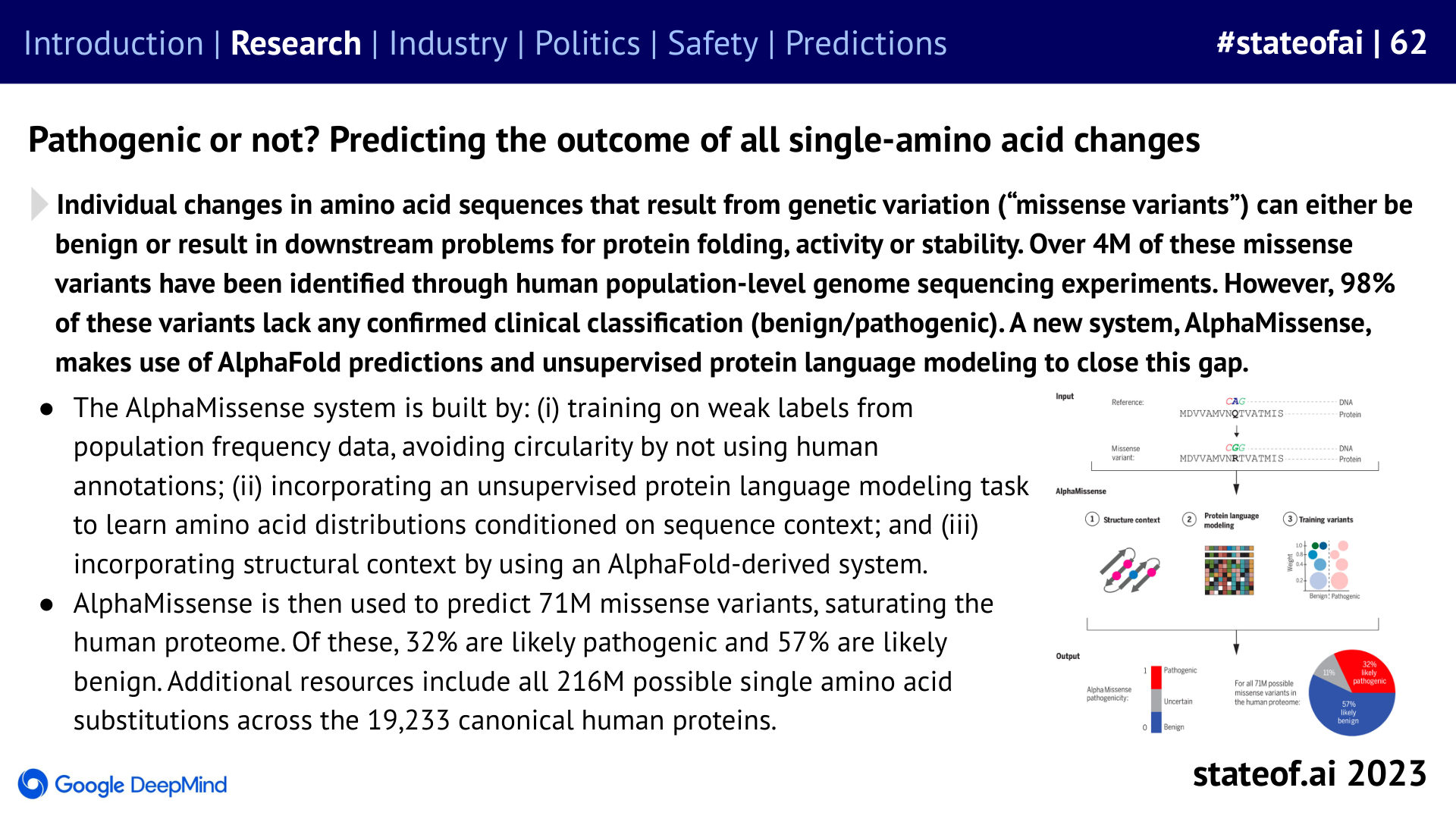
Weather models combine learning with physical structure
NowcastNet combined physical principles and statistical learning for precipitation forecasting. In an evaluation by 62 professional meteorologists in China, it ranked first in 71% of cases against the compared methods. Pangu-Weather addressed medium-range forecasts using a different model and dataset. Results needed to be read within their own forecasting tasks.