Compute capacity depended on more than the design of an AI accelerator. The 2021 report examined the equipment and manufacturing supply chains behind chips, highlighting ASML’s position in extreme-ultraviolet lithography and growing delays in semiconductor supply.
A specialized supplier enables leading manufacturing nodes
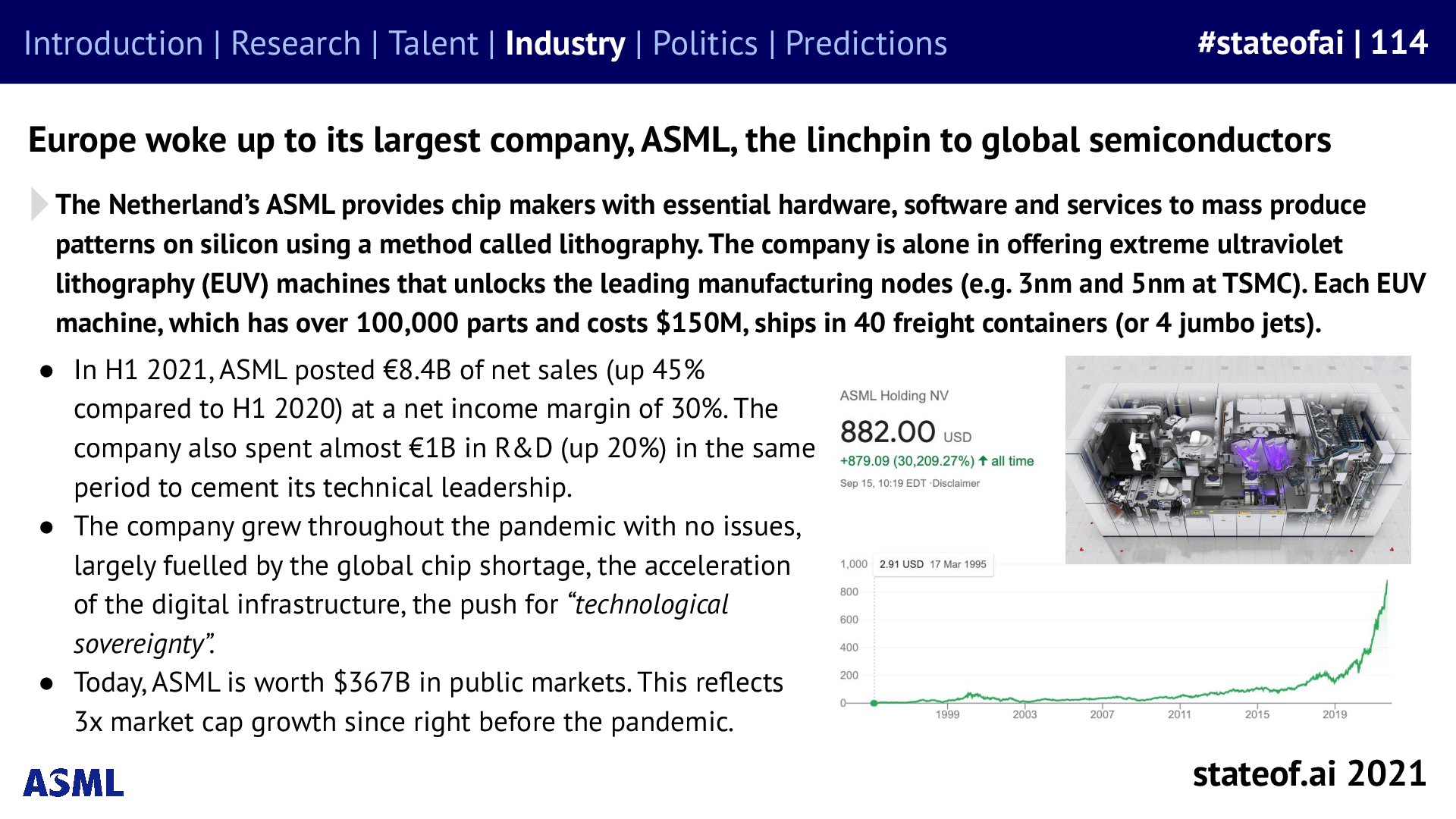
ASML was the sole supplier of the extreme-ultraviolet lithography machines discussed in the report. These systems enabled leading chipmaking processes and cost about $150 million each. That concentration made manufacturing equipment strategically important alongside chip designers and foundries.
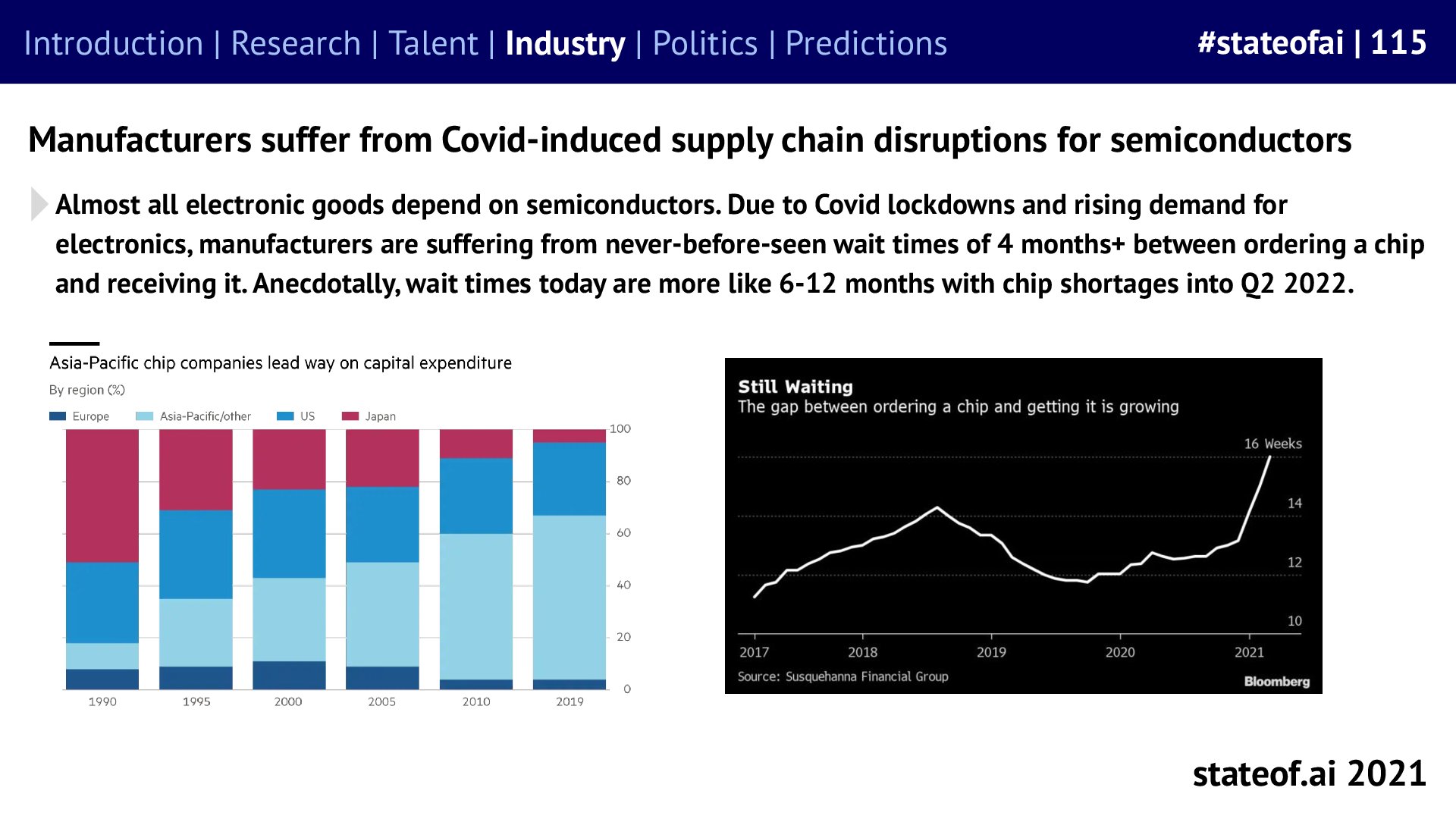
The report described chip order-to-delivery waits above four months amid pandemic disruption and demand growth. This was a broad semiconductor issue affecting electronic goods and manufacturers, not a measured delivery time for every AI GPU.
Chip design and chip availability were different constraints
A company could have a use for more processors and still wait months for delivery. The report’s supply-chain discussion placed AI demand within a wider semiconductor shortage. Capability improvements therefore depended partly on the timing and concentration of physical manufacturing capacity, not only on research progress.
Evidence you can use
Compute in the 2021 report
Historical snapshot: October 2021. Dates and populations are specified per row.
Equipment prices and supplier financials are historical. The lead-time figure concerns broad semiconductor supply and should not be read as a universal AI-accelerator delivery schedule.
Its extreme-ultraviolet lithography equipment enabled leading semiconductor manufacturing processes, making it a critical supplier in the chain that produces advanced chips.
The report highlighted extreme-ultraviolet lithography systems used in advanced semiconductor manufacturing. ASML’s position concerned the equipment needed to make chips, rather than an AI accelerator it sold to model developers.
It was the reported cost of an individual EUV lithography system. It was not the cost of a GPU, a complete semiconductor factory, or an AI training run.
It covered the first half of 2021. Preserving both the half-year period and the euro currency is necessary when comparing it with other business figures.
It described semiconductor orders taking more than four months before receipt, with some cases extending much longer. These were supply-chain observations, not a guaranteed delivery schedule for every chip.
The report linked COVID-related disruptions to rising demand from sectors including electronics and cars. AI infrastructure sat within this broader competition for semiconductor supply.
No. ASML supplied manufacturing equipment used upstream of finished chips. Its strategic role and an accelerator vendor’s adoption were different positions in the supply chain.
Historical snapshot published October 12, 2021. This web edition was prepared on 2026-10-11 from the online deck and original launch posts. Findings and forecasts retain their original time frame.
Benaich, Nathan, and Ian Hogarth. “Chip supply exposes industrial dependencies.” State of AI Report 2021. Historical report snapshot; web edition prepared 2026-10-11.