How to read this finding
This page describes the 2020 policy context, not current law or factory status. Selected cases cannot establish population rates; announced capital plans are distinct from completed capacity.
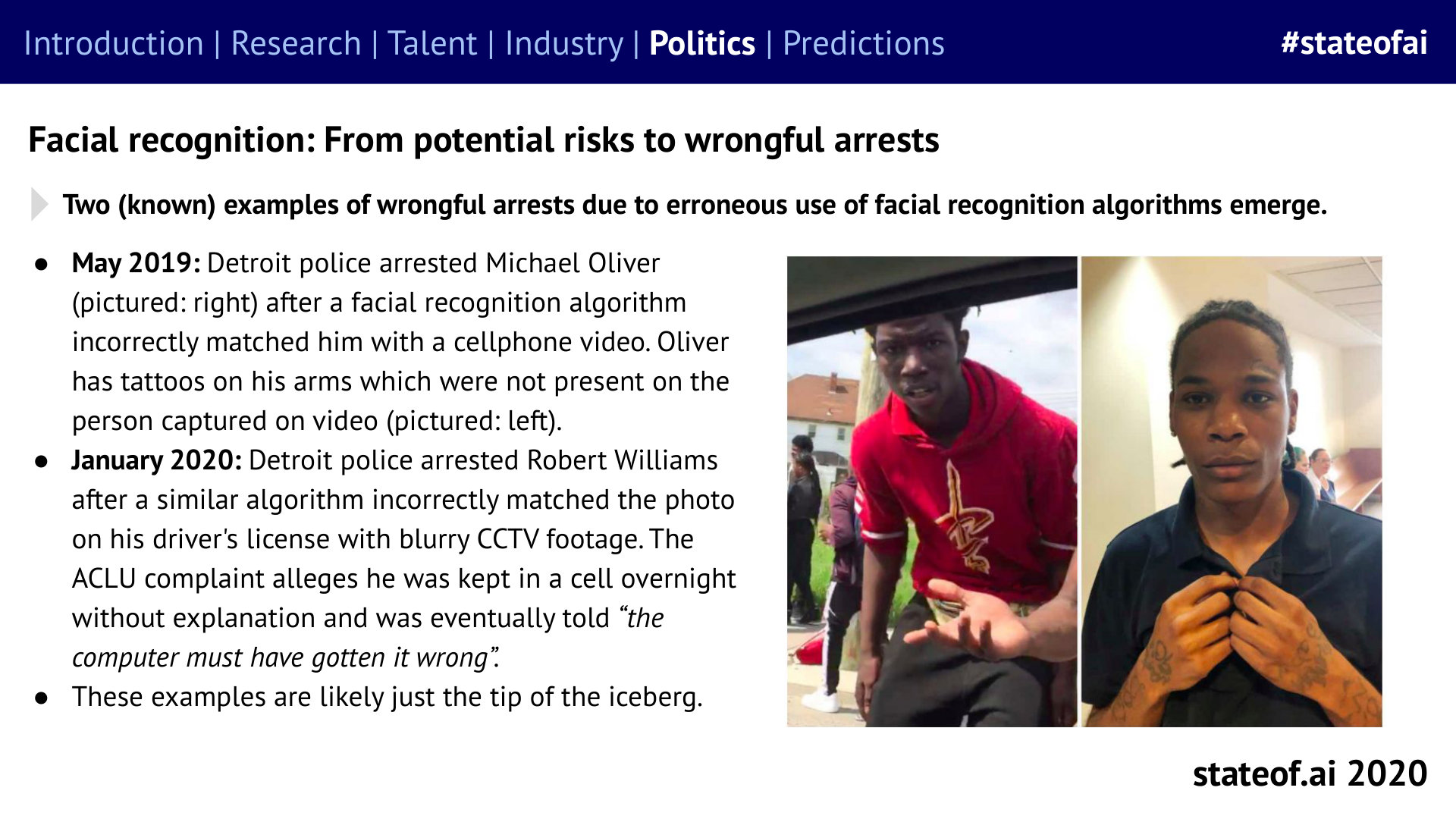
It described wrongful arrests after incorrect matches, showing how deployment decisions and accountability could turn model errors into serious harms.
This page describes the 2020 policy context, not current law or factory status. Selected cases cannot establish population rates; announced capital plans are distinct from completed capacity.
Evidence you can use
Historical snapshot: October 2020. Dates and populations are specified per row.
| Measure | Reported value | Definition and source |
|---|---|---|
| Wrongful-arrest examples discussed | 2 | Cases described in the report; not an exhaustive count.2020 report, PDF page 133 |
| TSMC Arizona investment announcement | $12B | Announced plan as of 2020, not a completed factory.2020 report, PDF page 155 |
| TSMC sales from US customers | 60% | Share reported in the discussion of mutual dependence.2020 report, PDF page 155 |
This page describes the 2020 policy context, not current law or factory status. Selected cases cannot establish population rates; announced capital plans are distinct from completed capacity.
Historical snapshot published October 1, 2020. This web edition was prepared on 2026-10-11 from the online deck and original launch posts. Findings and forecasts retain their original time frame.
Benaich, Nathan, and Ian Hogarth. “Why did the report focus on facial recognition?” State of AI Report 2020. Historical report snapshot; web edition prepared 2026-10-11.