Capital and acquisitions follow technical progress
By Nathan Benaich and Ian Hogarth · 2019 report
The 2019 report documented a growing market around AI research. Venture investment and acquisitions showed commercial interest, while new language capabilities were starting to enter products. Those financial measures described activity around AI, rather than proof that every application had found durable demand.
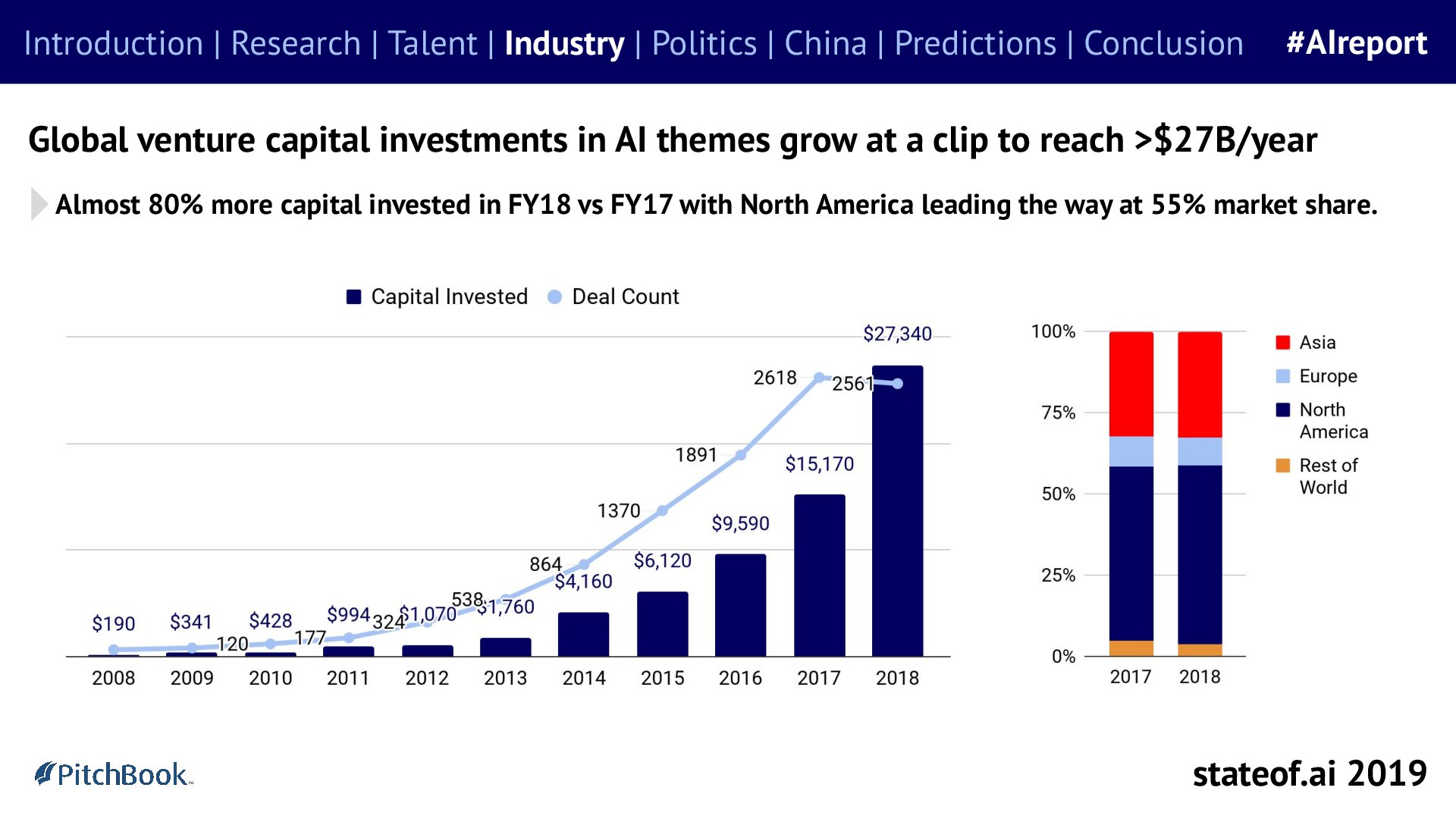
The report put annual venture investment in AI themes above $27 billion and described almost 80% growth in FY2018 over FY2017. North America accounted for 55% in the cited comparison. These were historical funding figures under the source’s AI classification.
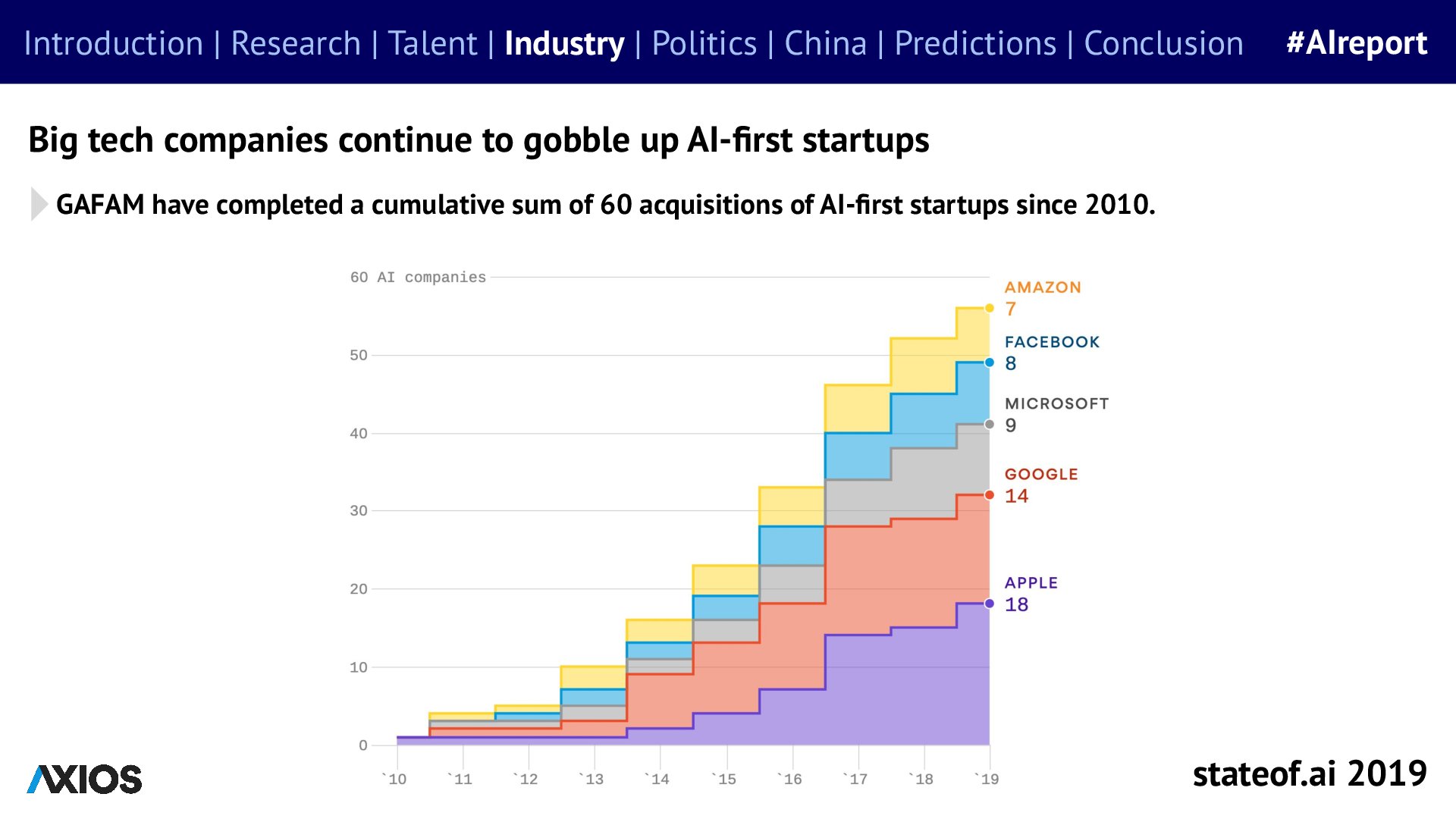
Google, Apple, Facebook, Amazon, and Microsoft had made a cumulative 60 acquisitions of AI-first startups since 2010 in the report’s tally. Acquisitions represented one route by which teams and capabilities moved into the largest technology companies.
Fulfillment brought several robotic systems into one workflow
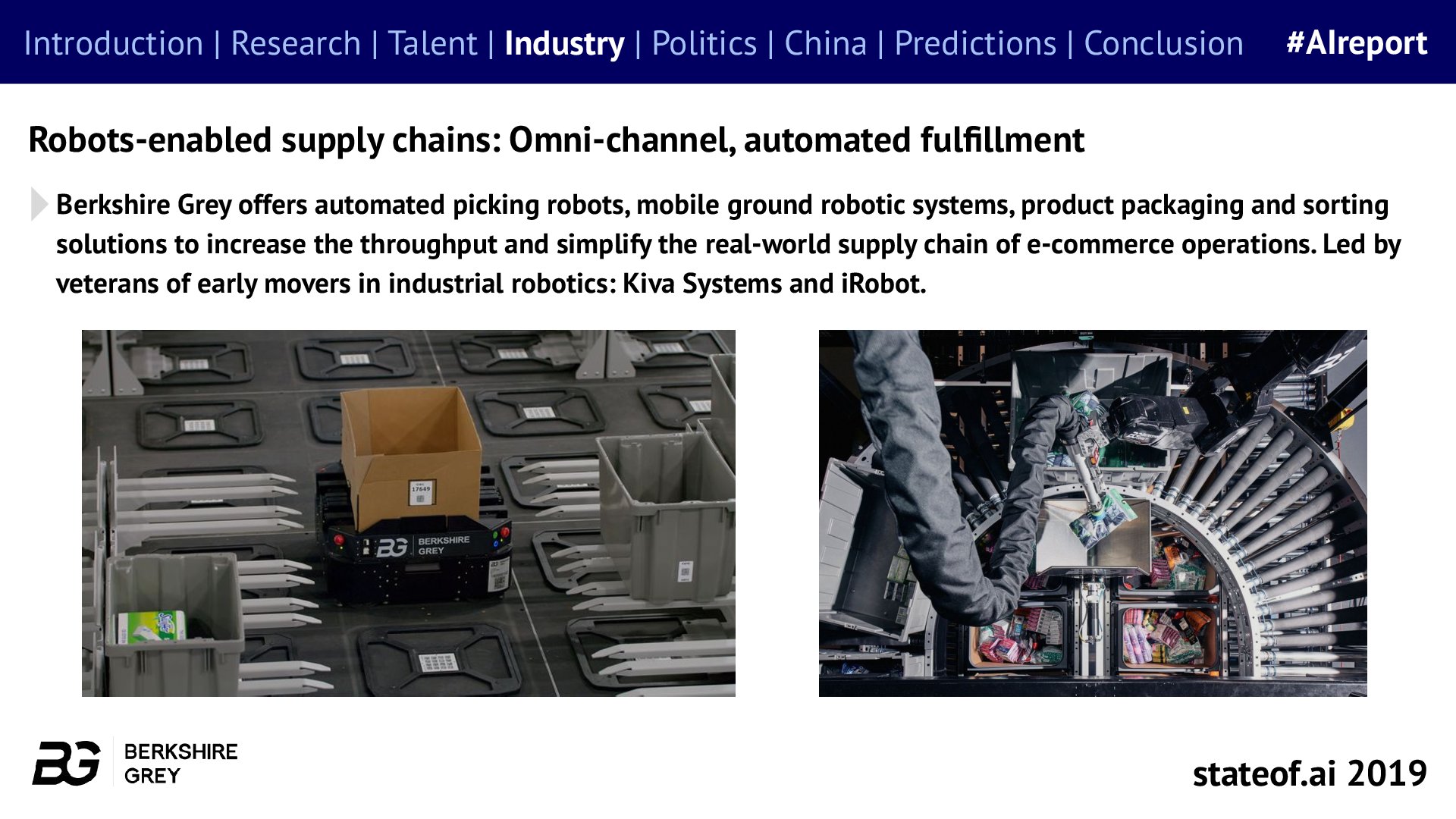
Berkshire Grey combined automated picking, mobile robots, packaging, and sorting for e-commerce fulfillment. The report presented this as an application of robotics across a supply-chain workflow. It helped make the industry story concrete: investment and acquisitions were accompanied by companies trying to increase throughput in physical operations.
Funding depends on the source’s definition of AI companies and is not a revenue estimate. The acquisition figure is cumulative, and funding growth does not measure product success.
It compared capital invested in FY2018 with FY2017 in the cited venture-investment dataset. It was a year-on-year funding comparison, not growth in AI product revenue.
The report described North America as leading with a 55% share in the cited comparison. The figure concerned that investment dataset and period, not all measures of AI activity.
No. Funding measured capital invested. The chart did not establish profitability, customer retention, or returns earned by the businesses receiving that capital.
The grouping covered Google, Apple, Facebook, Amazon, and Microsoft. The report used it to describe acquisitions of AI-first companies by large technology platforms.
The report described systems intended to increase throughput and simplify e-commerce supply chains by combining picking, movement, packaging, and sorting. It did not provide a universal productivity gain for every warehouse.
The report described Berkshire Grey combining picking robots, mobile ground robots, packaging, and sorting systems. These addressed several stages of fulfillment rather than a single isolated task.
Historical snapshot published June 28, 2019. This web edition was prepared on 2026-10-11 from the online deck and original launch posts. Findings and forecasts retain their original time frame.
2019 report, PDF page 56Original 2019 report. This edition has no printed slide numbers. References use one-based PDF pages.
2019 report, PDF page 57Original 2019 report. This edition has no printed slide numbers. References use one-based PDF pages.
2019 report, PDF page 64Original 2019 report. This edition has no printed slide numbers. References use one-based PDF pages.
Benaich, Nathan, and Ian Hogarth. “Capital and acquisitions follow technical progress.” State of AI Report 2019. Historical report snapshot; web edition prepared 2026-10-11.